

7 Reasons Live Music Fans Need Databases in 2026
July 2, 2026
7 Reasons Live Music Fans Need Databases in 2026
A live music database is a structured, searchable archive that links artists, venues, dates, setlists, and recordings into one accessible system. The reasons live music fans need databases go far beyond simple convenience. These tools solve real problems: scattered tour information, lost concert memories, and the near impossibility of tracking an artist’s full career across decades of shows. Platforms like MusicBrainz have spent 25+ years aggregating structured performance data. That depth of cataloging is what separates a useful database from a basic event listing.
1. Why databases are the top reason fans discover new shows
Concert databases aggregate tour dates and venue information across regions, making discovery far more reliable than scrolling social media feeds. A fan in a mid-size city can find out that a touring artist is playing a club 40 miles away, a show that would never appear in their local news feed. Databases pull from multiple sources and normalize the data into one searchable format.
Personalized notifications are a direct benefit of this structure. When a fan’s favorite artist announces a new date, a well-built database triggers an alert before tickets sell out. Livestream fan signups have shown that digital engagement creates lasting audience lists that venues use to notify fans about future shows. That same principle applies to any fan-facing database with email or push notification features.
- Search by artist, genre, city, or venue to surface shows you would otherwise miss
- Set alerts for artists you follow so new tour dates reach you immediately
- Browse music festivals by region or genre to plan ahead
- Use genre filters to find similar artists performing near you
Pro Tip: Filter by genre on Arteest to find artists you already love, then check their full chronological career page to see which cities they tour most frequently.
2. Preserving live music history through fan databases

Live music history disappears fast. Venues close, recordings get lost, and memories fade. Concert databases are the primary tool for preserving that history at scale. Volunteer-driven archiving efforts have digitized over 10,000 concert recordings, uploading them to public repositories where any fan can access rare performances that would otherwise be gone forever. That scale of preservation requires consistent cataloging workflows, not just good intentions.
Setlist databases function as community-driven archives. Each entry links an artist, a date, a venue, and a song sequence into a single record. That metadata structure is what makes a setlist searchable 20 years later. A fan researching a 1994 Phish run or a 2003 Radiohead tour can pull up exact song orders, notes about rare covers, and even crowd reactions logged by fans who were there.
“Successful preservation relies on consistent cataloging workflows and dedicated volunteer effort to digitize and upload rare performances.” — Digital Music News
The Boston Symphony Orchestra’s page on Arteest illustrates how chronological career cataloging works in practice. Every performance is organized by date, giving fans and researchers a clear timeline of the ensemble’s history. That kind of structured record is only possible when a database governs the data.
| Archive element | Why it matters |
|---|---|
| Artist name | Links every show to a searchable career timeline |
| Venue and date | Places the performance in historical and geographic context |
| Setlist sequence | Preserves the exact fan experience from that night |
| Fan notes | Captures rare moments, covers, and crowd details |
| Recordings | Provides direct audio access to otherwise lost performances |
3. Solving information overload with live music data management
Millions of data points are generated every second across the music industry. For live music fans, that volume shows up as fragmented tour announcements, conflicting setlist reports, and social media posts that disappear within hours. A database normalizes all of that noise into verified, consistent records.
The core problem is verification. Fan-submitted setlists are valuable, but they need a governance layer to stay accurate. Community-maintained archives use real-time verification loops where multiple fans confirm song orders, preventing data decay and keeping the archive reliable. Without that structure, a setlist database becomes an unreliable fan wiki rather than a durable reference.
- Databases normalize fan-contributed data against verified sources
- Duplicate entries get flagged and merged automatically in well-built systems
- Moderation tools let trusted community members correct errors quickly
- Structured metadata fields prevent inconsistent formatting across entries
Pro Tip: When you log a show on a setlist platform, add the opening act and any notable moments in the notes field. That detail is what future fans will search for when researching that tour.
Music professionals already use this approach. Booking agents and tour managers rely on structured data to make decisions about routing and venue selection. Fans benefit from the same logic. When a database organizes 30 years of an artist’s touring history, a fan can spot patterns, predict likely tour cities, and plan travel around shows with real confidence.
4. Tracking your personal concert history
Most live music fans have no reliable record of every show they have attended. Memory is selective. Ticket stubs get lost. A concert database solves this by giving fans a place to log every show with structured metadata: artist, date, venue, and setlist. That personal archive becomes a meaningful record over time.
Structured setlist and performance metadata links artist, date, venue, and set sequence into a single searchable record. For a fan who has attended hundreds of shows, that structure is the difference between a vague memory and a precise, shareable history. Arteest builds this into the platform through personal profile pages where fans organize collections and bins of favorite artists, all filterable and exportable as shareable lists.
The social dimension matters too. A fan who can share a custom list of every show they attended in 2024, formatted as a shareable image or video file, creates a conversation starter. That kind of sharing is only possible when the underlying data is clean and well-organized.
5. Real-time community interaction around live shows
Concert databases are not just archives. They are live tools that fans use during and immediately after shows. Setlist.fm and similar platforms let fans document shows in real time, logging each song as it happens. That live feed becomes a resource for fans watching livestreams or following along from home.
Fan-generated live updates are fragmented without a centralized database to organize and display them reliably. Social media posts scatter across platforms and disappear. A database captures those updates, verifies them, and makes them searchable for anyone who wants to relive the show or prepare for the next one.
- A fan at the show logs each song as it plays
- Other fans following remotely see the setlist update in real time
- Post-show, the community verifies and corrects the entry
- The finalized setlist becomes a permanent, searchable archive record
- Future fans researching that tour find accurate, detailed information
This workflow turns individual fan effort into a collective resource. The database is the infrastructure that makes it work.
6. Breaking geographic barriers for global fans
A fan in Tokyo can follow a touring band from Austin without ever buying a plane ticket. Concert databases make this possible by aggregating tour information globally and connecting fans to livestream opportunities that venues use to build long-term audience lists. That connection converts a one-time viewer into a repeat attendee when the artist eventually tours nearby.
Geographic filtering is one of the most practical benefits of music databases. A fan can search every show an artist has played within 200 miles over the past decade. That data reveals touring patterns and helps fans predict when an artist is likely to return to their region. Without a database, that research would require hours of manual searching across dozens of sources.
Arteest’s all artists directory gives fans a starting point for exactly this kind of research. Each artist page shows a chronological career timeline, making it straightforward to see where and when an artist has performed historically.
7. Building deeper artist knowledge through career data
A database does more than list shows. It tells the story of an artist’s career. Fans who track an artist across decades of touring develop a depth of knowledge that casual listeners never reach. They know which albums drove which tours, which cities an artist returns to every year, and which shows are considered legendary by the community.
MusicBrainz centralizes concert metadata collected over 25+ years, linking performance data directly to artists’ careers. That long-term aggregation is what makes deep artist research possible. A fan can trace how a band’s setlists evolved from their early club shows to their arena tours, seeing the career arc through the lens of live performance.
Arteest takes this further by giving every artist, band, record label, producer, and engineer their own page with a full chronological career view. Fans can explore all bands or drill into a specific artist to see their complete history. That depth of data turns passive listening into active engagement with an artist’s full story.
Key takeaways
Live music fans need databases because structured, searchable archives are the only reliable way to discover shows, preserve concert history, and engage with the global fan community at scale.
| Point | Details |
|---|---|
| Discovery depends on structure | Databases aggregate tour dates across regions, surfacing shows fans would otherwise miss. |
| Preservation requires consistent cataloging | Volunteer-driven archives have digitized 10,000+ concerts, but only systematic workflows keep them accurate. |
| Real-time use is as valuable as archiving | Fans log setlists live during shows, creating immediate community resources verified post-show. |
| Personal history needs a home | Structured metadata lets fans build searchable personal concert records they can share directly. |
| Career depth changes the fan experience | Chronological artist databases turn casual fans into knowledgeable ones by revealing full touring histories. |
Why I think every live music fan is missing out without a database
I have been to hundreds of shows over the years, and the ones I remember most vividly are the ones I documented. Not because I was distracted by my phone, but because logging a setlist or checking an archive before a show changed how I experienced it. Knowing that a band had only played a certain song three times in the past decade made hearing it live feel like an event inside an event.
The preservation argument is the one that gets me most. Volunteer fans have digitized over 10,000 concert recordings and made them publicly accessible. That is an extraordinary act of collective care for music history. Most fans have no idea this infrastructure exists, and that is a real loss. The shows that feel most legendary are often the ones that were documented most carefully.
My practical advice for casual fans: start with one artist you love and look up their full touring history. See which cities they favor, which albums drove their biggest tours, and which shows the community considers unmissable. That single exercise will change how you think about live music. For superfans, the next step is contributing. Log your shows, verify setlists, add notes. The archive is only as good as the people who build it.
The future of live music engagement runs through data. Fans who understand that will get more out of every show they attend.
— Jorel
Arteest and the live music fan experience
Arteest is built for fans who want more than a ticket stub. The platform gives every artist, band, record label, producer, and engineer their own page showing their complete career in chronological order. You can build personal collections, organize bins of favorite artists, and create custom shareable lists that export as image or video files to send directly to friends or post to social media.
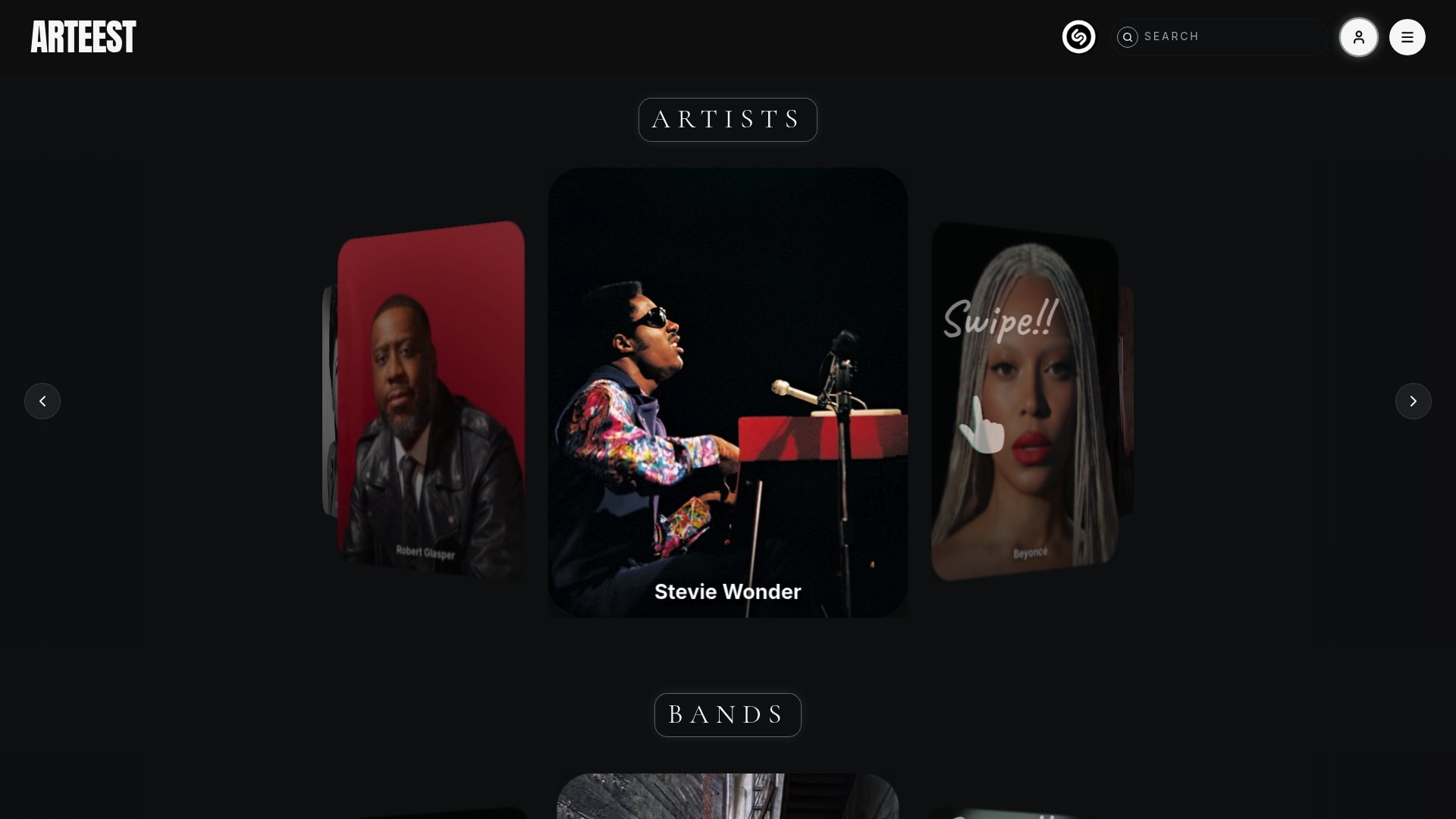
Whether you are tracking a jazz pianist like Brad Mehldau across decades of live performance or browsing music festivals by genre to plan your summer, Arteest puts the full picture in one place. The platform covers thousands of artists and bands, all organized so you can search, filter, and share what you find. Start with the Arteest music discovery platform and see how much deeper your connection to live music can go.
FAQ
What is a live music database?
A live music database is a structured archive that links artists, venues, dates, setlists, and recordings into searchable records. Platforms like MusicBrainz have aggregated this data for over 25 years.
How do setlist databases work?
Fans log songs in real time during shows, then the community verifies and corrects entries post-show. The result is a permanent, searchable record of every performance.
Why do live music fans need data management tools?
Fan-generated concert updates are fragmented across social media without a centralized database to organize them. A database normalizes and preserves that information reliably.
Can databases help fans discover artists they have never heard of?
Yes. Genre and venue filters surface artists performing near you who share characteristics with artists you already follow. Arteest’s genre directory organizes discovery exactly this way.
How are live music archives preserved long-term?
Volunteer-driven efforts have digitized over 10,000 concert recordings and uploaded them to public repositories. Consistent cataloging workflows and community moderation keep those archives accurate over time.