

Build a Fresh Daily Music Discovery Routine
July 2, 2026
Build a Fresh Daily Music Discovery Routine
A fresh daily music discovery routine is a structured listening practice built around scheduled time windows, a curated set of trusted sources, and a simple system for capturing and reviewing new tracks. Without structure, most listeners drift into passive replay loops, cycling through the same 50 songs for months. The fix is not more music. The fix is a repeatable system. Platforms like Spotify, live radio, and fan communities each play a specific role in that system. Gen Z averages 2 hours of streaming daily, and their active approach to discovery proves that intentional listening habits produce richer, more personal music libraries than passive algorithms ever will.
How to build a fresh daily music discovery routine with time windows
The most effective discovery routines assign distinct purposes to each listening window rather than treating all listening as the same activity. Assigning roles to discovery windows prevents the mental fatigue that comes from checking new music constantly without a clear goal.
Three window types cover the full range of daily listening needs.
- Fast discovery window (10–20 minutes). Use your morning commute or the first coffee of the day. The goal is exposure, not deep listening. Scan a new playlist, skim a radio show, or check a curated feed. Flag anything that catches your ear and move on.
- Background exploration window (30–90 minutes). This works during lunch, a workout, or a work session. You are not actively hunting. You are absorbing. Let a genre station or a host-led show run. Your brain registers patterns and moods without the pressure of making decisions.
- Focused deep-dive window (45–120 minutes weekly). Structured weekly sessions of 45–120 minutes are where real discovery happens. Pick one artist, one album, or one scene and go deep. Read liner notes. Check the artist’s back catalog. Follow the thread.
Pro Tip: Label each window in your calendar with its role. “Morning scan” and “Sunday deep dive” are different mental modes. Mixing them is what causes burnout.
Music discovery is contextual, tied directly to real-life moments and moods. A gym playlist serves a different purpose than a late-night ambient session. Matching your window type to your activity makes discovery feel natural rather than like homework.

What are the best sources for daily music exploration?
The right source list is small, diverse, and deliberately chosen. Limiting discovery sources to 4–6 trusted outlets keeps your input manageable and your attention focused. More than six sources creates noise faster than you can process it.
Here is how different source types compare:
| Source type | Strengths | Weaknesses | Best usage frequency |
|---|---|---|---|
| Streaming playlists (Spotify, Apple Music) | Personalized, algorithm-assisted, easy to access | Can become echo chambers over time | Daily, fast window |
| Live radio stations | Surprise factor, human curation, real-time culture | Less control over genre or mood | Background window, 3x weekly |
| Host-led shows and podcasts | Context, storytelling, deep genre knowledge | Time-intensive, not always skimmable | Weekly deep dive |
| Fan communities (Reddit, Discord) | Peer recommendations, emerging artist tips | Requires active participation | 2–3x weekly check-in |
| Music newsletters | Curated, editorial voice, low noise | Passive, inbox-dependent | Weekly |
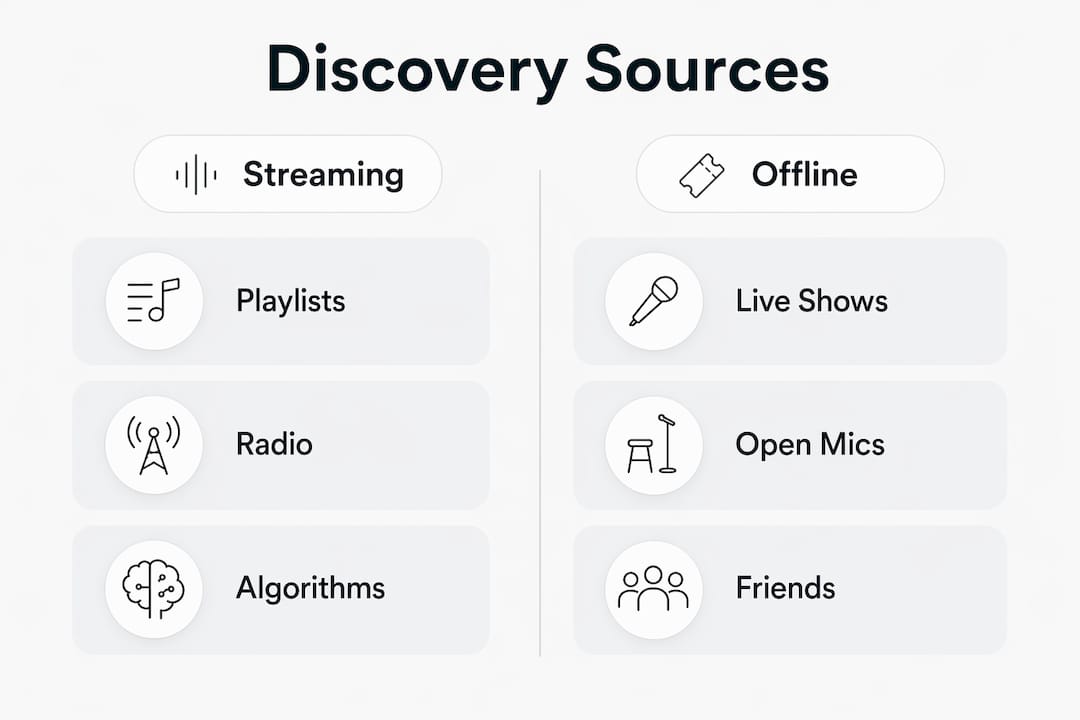
Listeners consistently prefer human-curated recommendations over purely algorithm-generated ones. That preference points to a clear strategy: use algorithms for volume and convenience, but anchor your routine with at least two human-curated sources.
A few principles for building your source list:
- Pick sources that cover at least two genres outside your current comfort zone.
- Include one source with editorial context, not just tracks. Knowing why a song matters deepens your connection to it.
- Rotate one source every 60 days to prevent stagnation. Keep the others stable for consistency.
- Browse music by genre on Arteest to identify scenes you have not explored yet.
Pro Tip: Treat your source list like a playlist. Prune it. A source that stops delivering quality tracks in two weeks is a source worth replacing.
How do you capture and organize new music finds without losing them?
Immediate capture is the single habit that separates listeners who grow their libraries from those who forget every good song by Tuesday. The brain does not reliably store “I should save that later.” The track is gone the moment the window closes.
A simple three-step workflow handles this without friction.
- Save first, sort later. Add anything interesting to a single “inbox” playlist the moment you hear it. Do not judge yet. Volume matters at this stage.
- Sort weekly, not daily. Once a week, move tracks from your inbox into genre folders, mood bins, or artist collections. Daily sorting creates decision fatigue.
- Revisit before removing. Never delete a track on first listen. Give it one more play in a different context before cutting it. Tracks that sound wrong at 8 a.m. often land perfectly at midnight.
Note-taking apps like Apple Notes or Google Keep work well for logging artist names, album titles, or scenes you want to explore further. A voice memo during a commute takes three seconds and saves the discovery. The tool matters less than the habit of using it immediately.
Pro Tip: Create one playlist called “Inbox” and one called “Keepers.” Nothing else. Complexity kills the habit before it starts.
Consistency across active and background listening times is what sustains discovery engagement over months rather than weeks. The capture system is what makes that consistency pay off.
How to run a weekly review session that deepens your library
The weekly review is where raw discovery becomes a real music collection. Without it, your inbox playlist fills up and becomes another thing you ignore. With it, every week produces a small, permanent expansion of your library.
A 15–20 minute Monday session works well for most listeners. Monday is the best day to review and prune saved music because the initial release-week noise has settled and you can judge tracks on their own merit rather than hype.
Here is a practical weekly review checklist:
- Listen through your inbox playlist (5–7 min). One play per track. No skipping back. First impressions count.
- Sort into three categories (3–5 min). Keep, maybe, and remove. “Maybe” tracks get one more week before a final call.
- Follow two new artists (2–3 min). From your “keep” tracks, pick two artists you do not already follow. Check their back catalog on Arteest’s full artist catalog or your streaming platform of choice.
- Identify one new scene or genre to explore next week (2 min). This keeps your source list fresh and prevents the routine from narrowing over time.
- Clear your inbox (1 min). An empty inbox is a signal that the system worked. Start the next week clean.
| Activity | Time estimate | Purpose |
|---|---|---|
| Listen through inbox | 5–7 min | First-pass evaluation |
| Sort into keep/maybe/remove | 3–5 min | Reduce clutter |
| Follow new artists | 2–3 min | Fuel ongoing discovery |
| Identify next week’s scene | 2 min | Keep sources fresh |
| Clear inbox | 1 min | Reset the system |
What are the biggest challenges in daily music discovery and how do you fix them?
Over-input leads directly to listener fatigue. Too many sources, too many playlists, and too much pressure to stay current turns a pleasure into a chore. The solution is not more discipline. The solution is a smaller, better-designed system.
The most common obstacles and their fixes:
- Overwhelm from too many sources. Cut your list to four sources immediately. Quality over volume always wins.
- Passive listening traps. Autoplay and algorithm-driven queues feel productive but rarely produce genuine discovery. Transforming routine listening into literate engagement means making active choices about what you hear, not just letting a platform decide.
- Routine fatigue after 3–4 weeks. Swap one source, change one time window, or pick a completely unfamiliar genre for a week. Small changes reset the habit without breaking it.
- Forgetting to capture. If you miss a track, you miss it. Accept that and focus on making the next capture easier. A dedicated “inbox” playlist with one tap saves is the lowest-friction fix available.
“Discovery is not about consuming more. It is about engaging better.” Listeners who understand how recommendation systems work reclaim agency over their own taste rather than outsourcing it to an algorithm.
Understanding how recommendations work is itself a discovery skill. Knowing that Spotify’s Discover Weekly refreshes every monday, or that a radio host curates by regional scene, changes how you interact with each source. Context makes the music mean more.
Open mic events are another underused discovery channel. Checking location-based open mic listings surfaces emerging artists in your city before they reach any streaming platform.
Key Takeaways
A sustainable daily music discovery routine requires scheduled windows, a limited source list, immediate capture, and a weekly review to convert raw listening into a growing, personal library.
| Point | Details |
|---|---|
| Schedule distinct windows | Assign fast, background, and deep-dive roles to separate listening slots. |
| Limit sources to 4–6 | More sources create noise; fewer sources create focus and consistent quality. |
| Capture immediately | Save tracks to a single inbox playlist the moment you hear them. |
| Review every Monday | Prune, sort, and follow new artists weekly to keep your library fresh. |
| Engage actively | Active listening beats passive autoplay for genuine, lasting discovery. |
The routine that actually changed how I hear music
I spent years treating music discovery as something that just happened to me. I would open Spotify, hit shuffle on a playlist I made in 2019, and call it a day. The routine I described above is not theoretical. It is what I actually do, and the difference it made was immediate.
The part most people skip is the weekly review. It feels like admin. It is not. It is the moment where a random track you saved on a Tuesday becomes an artist you follow for the next decade. I found Audiofreq through exactly this kind of review, buried in an inbox playlist I almost deleted.
The other thing I had to unlearn was the idea that more sources meant better discovery. It meant worse discovery. I was skimming everything and absorbing nothing. Cutting to five sources and actually listening to each one changed the quality of what I found more than any algorithm update ever did.
Spontaneity still matters. Some of my best finds came from a festival lineup I browsed on a whim, checking out artists playing Coachella I had never heard of. But spontaneity works best when it happens inside a structure. Without the routine, the discovery evaporates. With it, the discovery stacks.
— Jorel
Take your music discovery further with Arteest
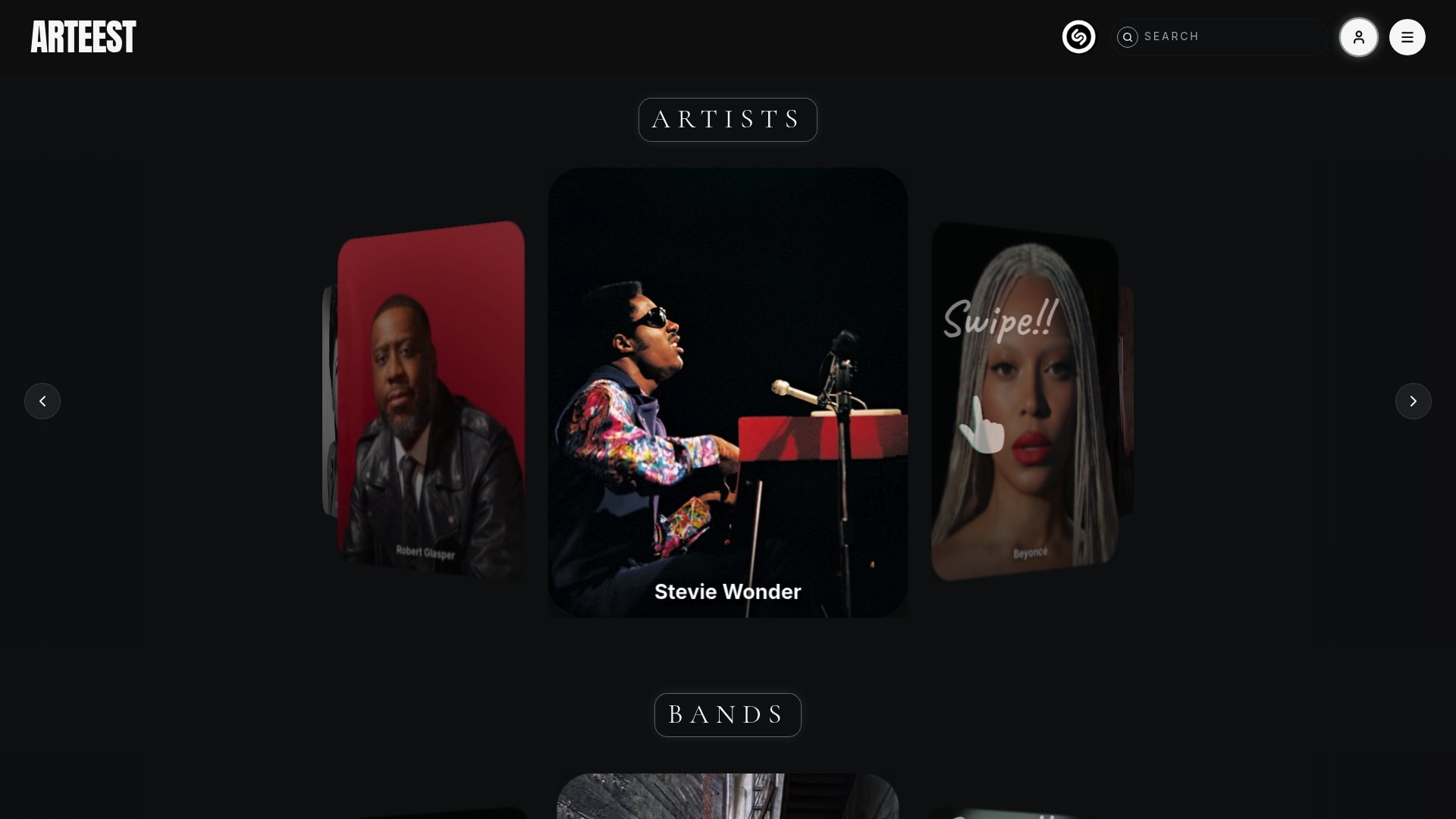
Arteest is built for listeners who take discovery seriously. The platform hosts thousands of artists, bands, record labels, producers, and engineers, each with their own page showing their complete career in chronological order. You can browse the full artist catalog on Arteest to find emerging names before they trend, or explore the complete band directory to dig into group discographies from first release to latest drop. Your personal profile lets you build collections and bins, stack filterable lists, and share your discoveries directly to social media or text them to friends as a PNG or video file. Arteest turns your weekly review session into something you actually want to open. Start exploring on Arteest and give your routine a permanent home.
FAQ
What is a daily music discovery routine?
A daily music discovery routine is a structured set of listening habits built around scheduled time windows, curated sources, and a system for capturing and reviewing new tracks. The goal is consistent, intentional exposure to new music rather than passive replay.
How many sources should I use for music discovery?
Limit your discovery sources to 4–6 trusted outlets. More than six creates input overload and reduces the quality of your engagement with any single source.
How long should a weekly music review session take?
A weekly review session takes 15–20 minutes. Spend that time listening through saved tracks, sorting them into keep or remove categories, and following two new artists.
Why does passive listening hurt music discovery?
Passive listening hands control to an algorithm, which tends to reinforce what you already know rather than expand it. Active engagement with recommendations produces more genuine discovery and a stronger personal connection to the music you find.
What is the best day to review new music?
Monday is the best day to review and prune saved music. The release-week hype has settled by then, and you can evaluate tracks on their actual merit rather than their buzz.