
How Music Collections Motivate Listening in 2026
July 2, 2026
How Music Collections Motivate Listening in 2026
A curated music collection is defined as a personally organized library that drives active, motivated listening through psychological structure, emotional regulation, and identity formation. Understanding how music collections motivate listening goes beyond knowing what songs you like. The organization itself changes how you engage. Research in 2026 confirms that deliberate collectors listen more, discover more, and report deeper satisfaction than passive streamers. Platforms like Arteest, tools like listening trackers, and methods like psychological function sorting are reshaping what it means to truly own your music experience.
How music collections motivate listening through psychology
The most overlooked driver of listening motivation is not taste. It is organization. When you organize by psychological function rather than genre or release year, your collection becomes an active tool for emotional regulation, not just a catalog.
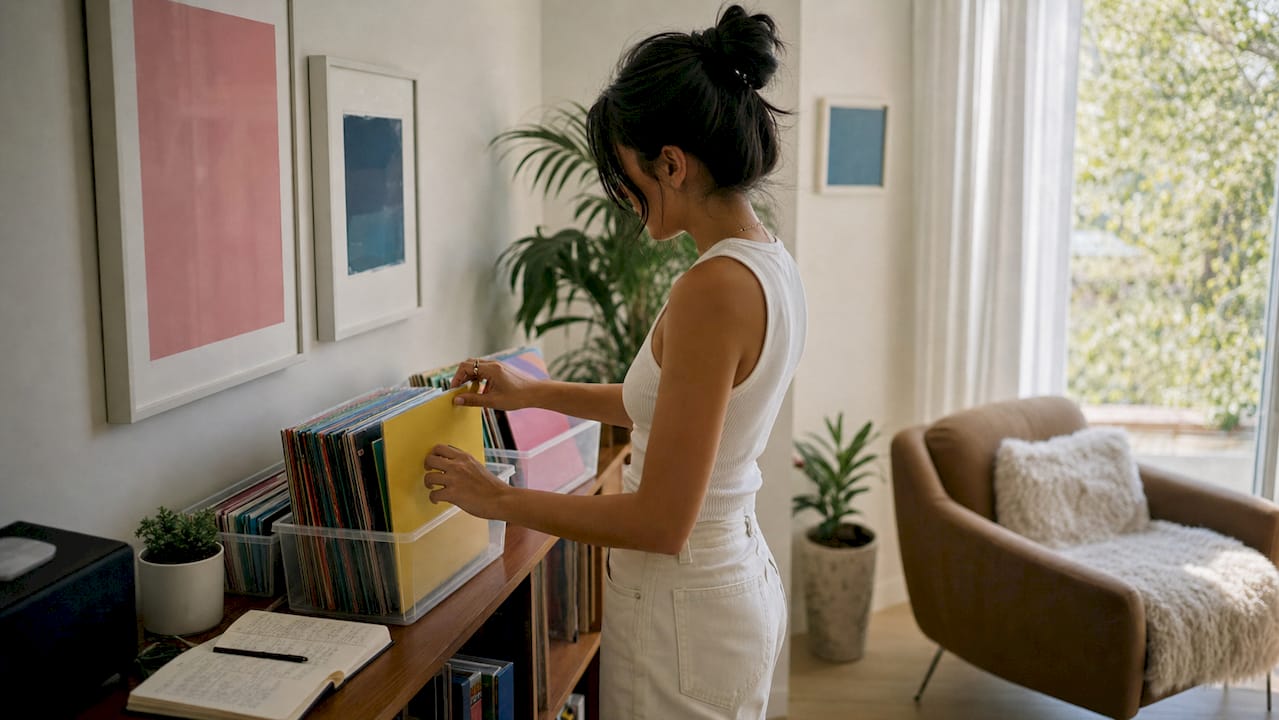
Think about the difference between a playlist labeled “Rock” and one labeled “Settling.” The first tells you what the music is. The second tells you what it does for you. Therapist Rick Belden’s work on vinyl collections shows that sorting music by how it affects your nervous system, whether it calms or stimulates, creates a stable emotional environment where meaning emerges naturally.
This approach produces three distinct motivational effects:
- Emotional readiness: You reach for music more often because you know exactly what each section of your collection delivers.
- Reduced decision fatigue: Browsing a psychologically organized library takes seconds, not minutes of scrolling.
- Therapeutic reinforcement: Returning to music that reliably regulates your mood builds a positive feedback loop that makes listening feel rewarding.
Pro Tip: Label at least three sections of your collection by emotional function, such as “Focus,” “Wind Down,” and “Energy Up,” and notice how your daily listening frequency changes within two weeks.
Does logging albums actually increase listening motivation?
The answer is yes, and the data is specific. Listening streak tracking leads to 3x more total music volume and 5x more new artist discovery. That is not a marginal improvement. It means the simple act of tracking your listening habit transforms you from a passive consumer into an active discoverer.
Here is a four-step logging workflow that serious collectors use to build both motivation and satisfaction:
- Log every album front to back. Serious cataloging prioritizes full-album listening over playlists to build genuine engagement and meaningful ratings. Skipping tracks breaks the narrative arc an artist intended.
- Record the recommendation source. Did a friend suggest it? Did you find it through a live video? Tracking origin builds a personal trust filter that improves future discovery satisfaction.
- Rate immediately after listening. Fresh impressions are more accurate than memories. A simple 1–5 scale captures your honest reaction before familiarity distorts it.
- Review your log monthly. Patterns emerge. You will see which sources consistently deliver music you love and which waste your time.
Collectors who log albums intentionally rate peer-recommended music 4.3 stars on average versus 2.9 stars for algorithmic suggestions. That gap represents a fundamentally different quality of listening experience. Achievement and streak systems in music apps also build a music identity, reinforcing the self-perception that you are someone who takes music seriously. That identity is its own motivational engine.
Why do physical formats still drive collector motivation?
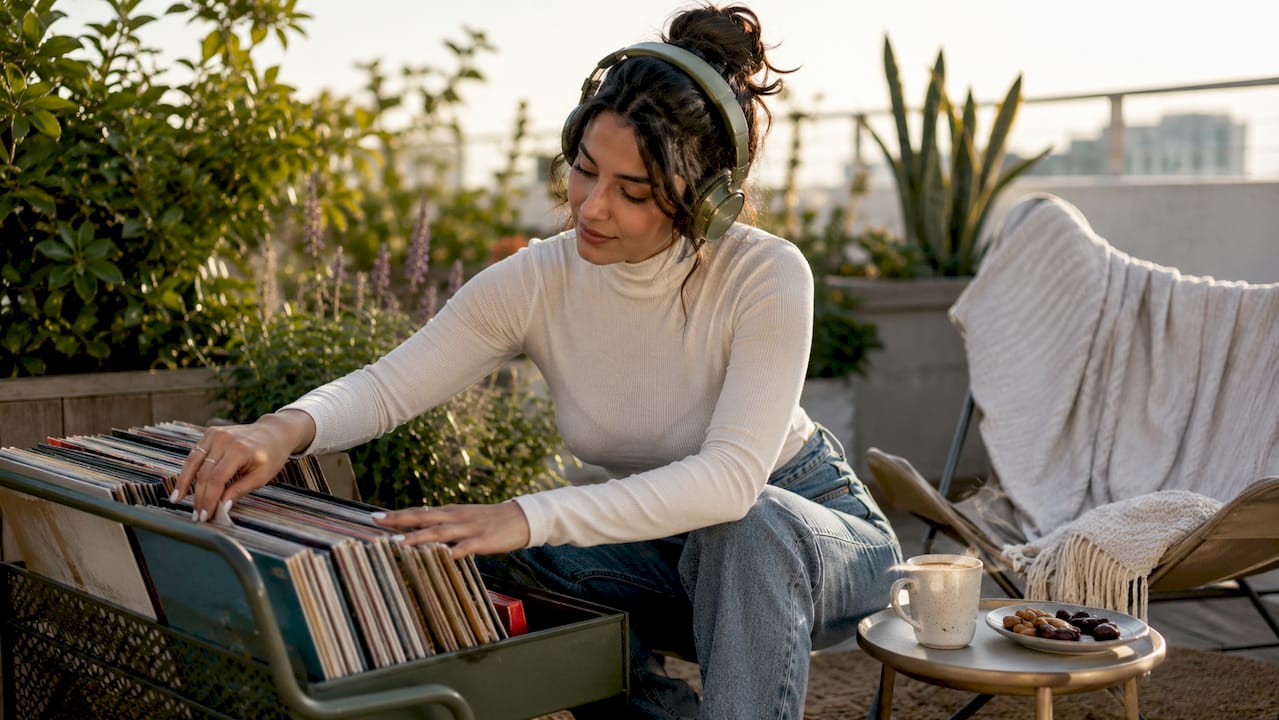
Vinyl is not nostalgia. It is a deliberate choice to own music in a way that demands attention. Vinyl sales have increased annually from 2006 through 2024, surpassing CD revenue in the U.S. in 2024. That trend reflects a real hunger for tangible music ownership that streaming cannot satisfy.
Physical collections do something digital libraries cannot replicate easily. A music library functions as a personal diary, carrying imprints of life moments and fostering connection. The copy of Rumours you bought at a record fair in 2019 carries a different weight than a Spotify save. That weight motivates you to actually sit down and listen.
| Format | Listening Behavior | Motivation Driver |
|---|---|---|
| Vinyl | Ritualized, front-to-back | Tactile engagement, memory |
| CD | Deliberate, album-focused | Ownership, liner notes |
| Digital library | Flexible, searchable | Organization, portability |
| Streaming playlist | Passive, shuffle-heavy | Convenience, discovery |
Physical formats also promote ritualized listening. Cleaning a record, placing the needle, and sitting with the sleeve art creates a ceremony that signals to your brain: this matters. That ritual is a powerful motivator for sustained, attentive engagement.
Pro Tip: If you are building a physical collection, start with ten records you already love rather than ten you think you should own. Emotional connection to your collection matters more than cultural credibility.
What practical strategies build a motivating music collection?
The collectors with the deepest listening motivation share one trait. They treat their collection as a living system, not a static archive. Here are the strategies that work:
- Use an inbox-style queue. Inbox-style workflows prevent decision paralysis and keep music additions deliberate and vetted. Add new recommendations to a queue, then work through them systematically rather than saving everything to one giant library.
- Organize by psychological function, not just genre. Sort sections by what the music does for you. Categories like “Deep Focus,” “Social Energy,” and “Late Night” outperform genre labels for motivating daily use.
- Set a listening goal. Fifty full albums per year is a realistic target for most enthusiasts. That works out to roughly one album per week, with room for revisits. Goals create forward momentum.
- Track your recommendation sources. Over time, you will identify two or three people, publications, or platforms whose taste consistently aligns with yours. Prioritize their suggestions. This is your trust filter.
| Strategy | Best For | Key Benefit |
|---|---|---|
| Inbox queue | New music exploration | Reduces overwhelm, keeps curation deliberate |
| Psychological sorting | Daily listening | Faster access, emotional relevance |
| Annual album goal | Long-term engagement | Builds identity, sustains motivation |
| Source tracking | Discovery quality | Improves satisfaction over time |
The inbox approach, developed by writer Brendan Landis, is particularly effective for enthusiasts who feel overwhelmed by the volume of new music. You stop trying to listen to everything and start listening to the right things.
Curated collections vs. algorithmic streaming: which motivates more?
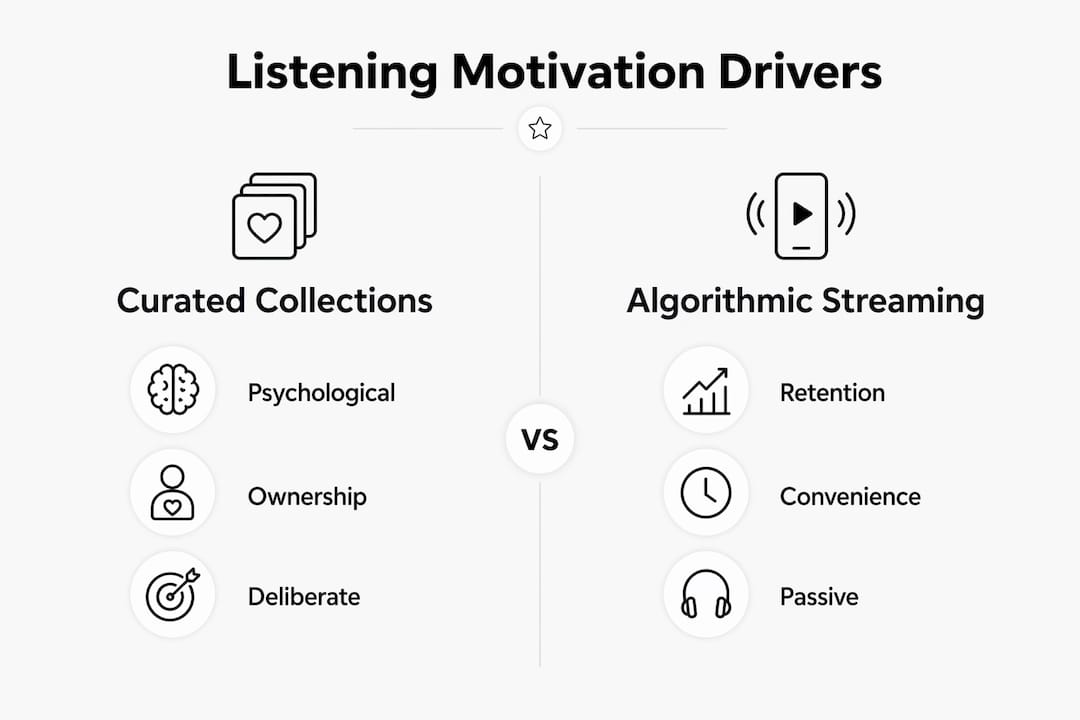
Algorithmic streaming is optimized for retention, not satisfaction. The two are not the same thing. Streaming platforms keep you listening by serving familiar sounds and easy transitions. Curated collections motivate you to listen by giving you something to discover, revisit, and own.
The satisfaction gap is measurable. Intentional collectors rate peer-recommended albums 4.3 stars versus 2.9 for algorithmically served music. That 1.4-star difference reflects a fundamentally different relationship with the music. Curated listening builds personal meaning. Algorithmic listening builds habit without depth.
Here is what deliberate curation delivers that streaming cannot:
- Personal meaning: Every item in your collection was chosen by you, for a reason. That intentionality creates emotional investment.
- Discovery with context: When a trusted friend recommends an album, you approach it differently than when an app serves it up. Context shapes perception.
- Long-term engagement: Collections grow and evolve with you. Algorithms optimize for now, not for the listener you are becoming.
Exploring live video performances is one of the most underused methods for finding music worth adding to a curated collection. Live recordings reveal an artist’s depth in ways that studio albums sometimes obscure.
Key takeaways
Curated music collections motivate deeper listening because psychological organization, deliberate logging, and tangible ownership create emotional investment that passive streaming cannot replicate.
| Point | Details |
|---|---|
| Psychological organization drives motivation | Sorting music by emotional function makes collections easier to use and more rewarding to revisit. |
| Logging multiplies discovery | Streak tracking leads to 3x more listening volume and 5x more new artist discovery. |
| Physical formats deepen engagement | Vinyl and CDs create ritualized listening habits that build stronger emotional connection to music. |
| Inbox workflows prevent overwhelm | Queuing new music deliberately keeps curation focused and sustains long-term motivation. |
| Curation beats algorithms for satisfaction | Intentional collectors rate peer-recommended music 4.3 stars versus 2.9 for algorithmic suggestions. |
The collector mindset nobody talks about
By Jorel
Most articles about music organization focus on the system. I want to talk about what the system does to you over time.
When I started logging every album I listened to, I expected to feel more organized. What I did not expect was to feel more curious. The act of tracking forced me to pay attention in a way that passive listening never did. I started noticing production choices, sequencing decisions, and lyrical themes I had missed for years on albums I thought I knew well.
The bigger shift was identity. Once you have a log of 200 albums with your own ratings and notes, you stop thinking of yourself as someone who just likes music. You become someone who studies it. That identity change is the real motivational engine behind deliberate collecting.
I have also learned that physical and digital collections serve different psychological needs. My vinyl shelf is memory. My digital library on Arteest is discovery. Both matter, and treating them as competing formats misses the point entirely. The collectors I respect most use both intentionally, and they never confuse convenience with depth.
If you are not setting annual listening goals, you are leaving the best part of music fandom on the table.
— Jorel
Build your collection on Arteest
Arteest is built for exactly the kind of intentional music engagement this article describes. Every artist, band, record label, producer, and engineer on the platform has a dedicated page showing their complete career in chronological order. You are not browsing a feed. You are studying a body of work.
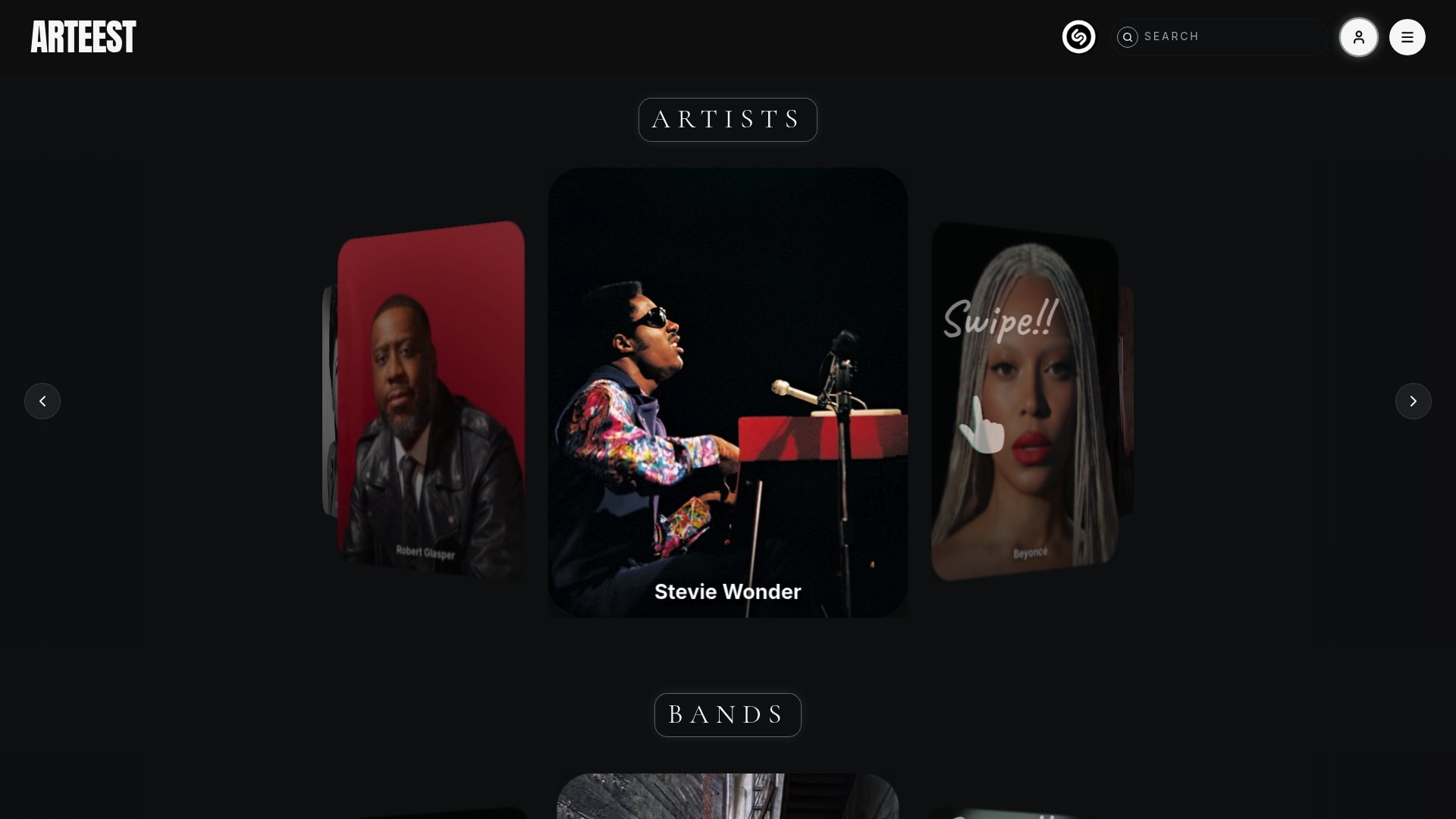
Your personal profile on Arteest supports collections and bins organized however you choose, with filterable, shareable lists you can export as a PNG or video file to send directly to friends or post to social media. Explore all genres to find new corners of music worth adding to your collection, or browse all artists to build a discovery queue that actually goes somewhere. This is premium music discovery designed for people who take listening seriously.
FAQ
How do music collections motivate listening differently than playlists?
Collections create personal ownership and identity, while playlists serve immediate convenience. Collectors who log albums intentionally report significantly higher satisfaction than passive playlist listeners.
What is the best way to organize a music collection for motivation?
Organize by psychological function rather than genre. Sorting music by how it affects your mood, such as calming versus stimulating, makes your collection easier to use and more emotionally rewarding.
Does tracking listening streaks actually improve music discovery?
Yes. Streak tracking leads to 3x more total listening volume and 5x more new artist discovery compared to untracked listening habits.
Why are vinyl and physical formats growing in popularity?
Vinyl sales surpassed CD revenue in the U.S. in 2024 and have grown every year since 2006. Physical formats create ritualized, attentive listening that streaming cannot replicate.
How many albums should i aim to listen to per year?
Fifty full albums per year is a realistic and motivating goal for most enthusiasts. That pace builds a meaningful log, sharpens your taste, and sustains discovery momentum across all twelve months.