

How Music Curation Works: A Guide for Enthusiasts
July 2, 2026
How Music Curation Works: A Guide for Enthusiasts
Music curation is defined as the intentional selection, sequencing, and organization of songs to create purposeful listening experiences that go far beyond shuffling a playlist. With over 100,000 new tracks uploaded to streaming platforms every single day, the ability to filter, frame, and present music with purpose has become one of the most valuable skills in the industry. How music curation works involves a mix of human editorial judgment, algorithmic data, and deep cultural knowledge. Platforms like Spotify for Artists, editorial teams at Apple Music, and AI-assisted curation tools all play distinct roles in shaping what you hear next.
How does human vs. algorithmic music curation differ?
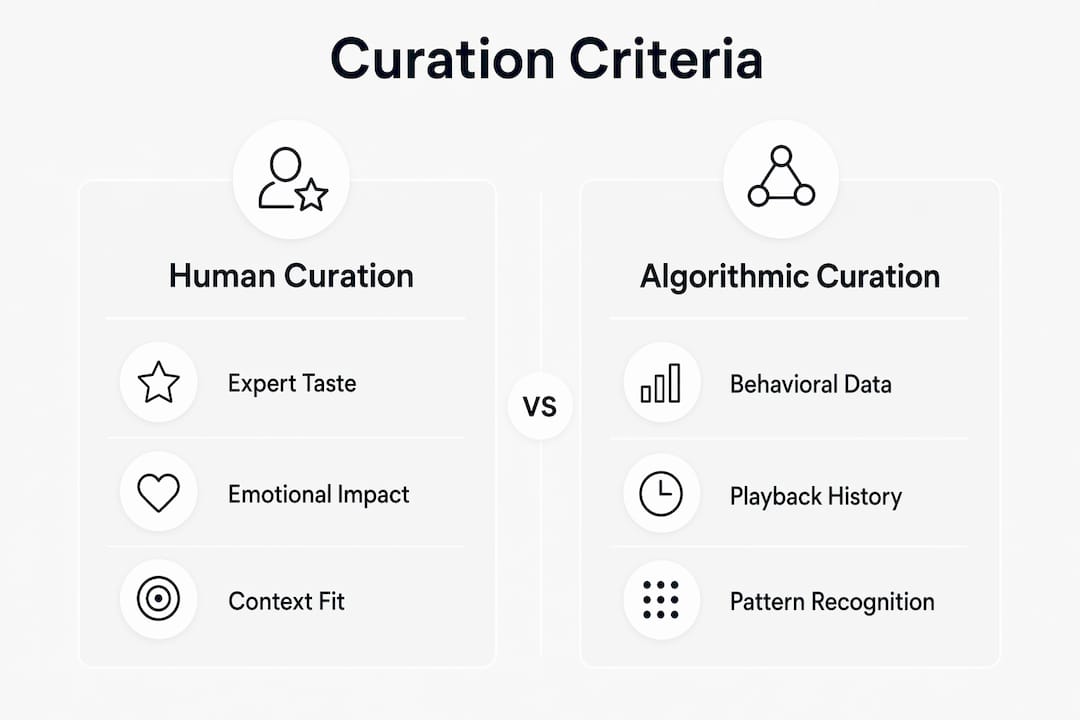
Human curation and algorithmic curation are not opposites. They are two ends of a spectrum that work best together. Human editorial curation applies cultural context, narrative, and expert taste to build playlists with a clear point of view. A human curator at Pitchfork or NPR Music does not just pick good songs. They sequence them to tell a story, reflect a moment in culture, or guide a listener through an emotional arc.
Algorithmic curation, by contrast, relies on behavioral data. Spotify’s Discover Weekly and Apple Music’s personalized mixes analyze listening patterns, skip rates, and save counts to surface tracks you are statistically likely to enjoy. Editorial playlists keep tracks for 1–4 weeks, while algorithmic playlists rotate daily or weekly based on real-time engagement metrics. That difference in pace reflects a deeper difference in purpose: editorial playlists build culture, algorithmic playlists respond to it.

AI-assisted curation sits in the middle. AI tools handle initial filtering at scale, scanning thousands of submissions for sonic fit and production quality, while human curators make the final call. This hybrid model is growing fast because neither approach alone can do the full job.
| Factor | Human Curation | Algorithmic Curation |
|---|---|---|
| Basis for selection | Expert taste and cultural context | Listening behavior and engagement data |
| Update frequency | Every 1–4 weeks | Daily or weekly |
| Strength | Storytelling and editorial voice | Personalization at scale |
| Weakness | Limited reach and volume | Lacks cultural nuance |
| Best use case | Genre-defining or mood-driven lists | Personalized discovery feeds |
Pro Tip: If you want to get on editorial playlists, submit through your distributor at least seven days before your release date. Algorithmic playlists, on the other hand, respond to post-release engagement, so focus on driving saves and repeat listens after you drop.
What criteria do curators use to evaluate tracks?
The music curation process is faster and more demanding than most artists expect. Curators evaluate tracks within 15–20 seconds, focusing on whether the opening hook grabs attention and whether the production quality meets the playlist’s standard. A weak intro or muddy mix ends the conversation immediately.
Beyond the first impression, curators assess several layers of a track before making a decision:
- Sonic fit: Does the track’s tempo, texture, and energy match the playlist’s existing sound?
- Production quality: Is the mix clean, balanced, and competitive with commercial releases?
- Emotional impact: Does the track create a feeling that serves the playlist’s purpose?
- Artist narrative: Is there a story behind the artist that adds meaning to the placement?
- Release timing: Is the track new enough to feel current, or is it a catalog gem with a specific purpose?
- Genre alignment: Does the track fit the playlist’s genre without feeling forced?
Curators prioritize immediate hooks, sonic consistency, and emotional resonance. Poor production or a weak intro leads to rejection regardless of how strong the rest of the track is. This is why artists are advised to spend as much time on the first eight bars as on the entire song.
Submitting to curators through platforms like SubmitHub, Groover, or directly via Spotify for Artists gives your track a structured path to consideration. Each platform has its own norms, but the evaluation criteria remain consistent: hook first, quality always, context matters.
Pro Tip: Use forensic listening when building your own playlists. Play each track on multiple speaker systems, at different volumes, and in different rooms. You will catch sonic inconsistencies that casual listening misses, and your playlists will feel more polished as a result.
How does context shape playlist curation and listener engagement?
Context is the variable that separates a forgettable playlist from one that people return to for years. Context-based playlists outperform genre-only playlists in generating sustained listener engagement. A playlist built around “late-night studying” or “morning run energy” creates a specific emotional contract with the listener. Genre-only lists make no such promise.
Skilled curators build emotional journeys using sequencing and energy arcs. Think of a great DJ set: it does not open at peak energy and stay there. It builds, breathes, peaks, and resolves. The same logic applies to a well-curated playlist. Successful curation is contextual framing, balancing individual tracks with sequencing and emotional flow through what practitioners call forensic listening.
Here is how a curator might structure an emotionally coherent playlist from start to finish:
- Open with familiarity. Start with a track the listener likely knows. This builds trust and signals the playlist’s tone.
- Introduce tension. Add a track that is slightly unexpected but still fits the mood. This is where discovery happens.
- Build to a peak. Place the highest-energy or most emotionally intense track roughly two-thirds of the way through.
- Create resolution. End with tracks that bring the energy down and leave the listener with a clear emotional impression.
- Leave one surprise. A final unexpected track that rewards listeners who stayed until the end builds loyalty and repeat plays.
Playlist effectiveness depends on song-playlist fit, not just track quality. A brilliant song placed on the wrong playlist underperforms. This is why the best curators think like directors, not just music fans.
What impact does music curation have on artists and the industry?
Music curation shapes careers. Independent curated playlists act as leading indicators for artist success, often surfacing talent months before mainstream algorithms or radio recognize it. When a respected independent curator places an unknown artist on a high-traffic playlist, that placement signals quality to both listeners and industry professionals.
A&R teams at major labels actively monitor high-save-rate playlists for emerging artists. A save on a playlist signals quality to algorithms, triggering further inclusion in automated discovery feeds. This creates a compounding effect: human curation feeds algorithmic curation, which amplifies reach, which attracts more industry attention.
“Human curation and algorithmic discovery form a feedback loop where human taste signals quality to algorithms.” — Music24.com
The financial stakes are real. Streaming revenue is directly tied to playlist placement, and the difference between a mid-tier playlist and a flagship editorial list can mean tens of thousands of streams per week. Independent curated playlists signal demand stronger than passive streams, which is why playlist placement has become a core metric in artist development strategies.
Curators act as passionate potential fans, seeking to improve their collections rather than acting as gatekeepers. That mindset shift matters for artists approaching curators. You are not pitching a gatekeeper. You are offering a fan something they will genuinely love.
How can aspiring curators build real skills and credibility?
Becoming a credible curator takes more than good taste. It requires deep genre knowledge, cultural awareness, and consistent output over time. Here is where to focus your energy:
- Develop genre fluency. Study the history, subgenres, and key artists within your focus area. A jazz curator who cannot distinguish between hard bop and post-bop loses credibility fast. Explore diverse music genres to build a wider reference library.
- Use AI tools strategically. Platforms like Soundiiz and Spotify for Artists offer data on listener behavior and track performance. Use them to inform decisions, not replace them.
- Build a consistent identity. Your playlists should have a recognizable voice. Listeners should know what to expect from your curation the way they know what to expect from a trusted publication.
- Network with artist communities. Connect with artists, producers, and other curators through platforms like Arteest, Bandcamp, and SoundCloud. Relationships surface music that never reaches submission queues.
- Submit strategically. Use SubmitHub or Groover to pitch tracks to other curators. Understanding the submission process from both sides makes you a better curator and a better advocate for artists.
- Prioritize quality over quantity. A 20-track playlist with no weak links beats a 100-track list with filler. Every track should earn its place.
Curation removes decision fatigue, expanding listeners’ horizons through narrative arcs. That is the real value you provide as a curator. You are not just organizing music. You are giving people permission to discover something new. You can find new music you’ll love by studying how other curators approach discovery and borrowing their frameworks.
Key takeaways
Effective music curation combines human editorial judgment, contextual sequencing, and algorithmic feedback to create listening experiences that drive discovery, artist growth, and sustained audience engagement.
| Point | Details |
|---|---|
| Human and algorithmic curation complement each other | Editorial playlists build culture; algorithms scale personalization using engagement data. |
| First impressions decide track selection | Curators evaluate tracks within 15–20 seconds, so hooks and production quality are non-negotiable. |
| Context beats genre in playlist design | Activity-based and mood-based playlists generate stronger long-term listener engagement than genre-only lists. |
| Curation shapes artist careers | High-save playlists signal quality to algorithms and attract A&R attention before mainstream recognition. |
| Aspiring curators need consistency and community | A recognizable curatorial voice built over time, combined with artist relationships, creates lasting credibility. |
What i’ve learned after years of listening obsessively
The hardest part of curation is not finding good music. Good music is everywhere. The hard part is resisting the urge to include everything you love and instead building something with a clear emotional logic.
Early on, I treated playlists like personal archives. Every track I added was something I wanted to remember. The result was a mess. Forty songs with no throughline, no arc, no reason for a stranger to care. The shift happened when I started thinking about the listener’s experience rather than my own. What do they feel at track three? Where do they need a release at track eight?
Data helps, but it cannot replace that instinct. I use Spotify for Artists analytics to see where listeners drop off, and that information is genuinely useful. But the decision to move a track from position six to position two is still a gut call. The numbers confirm what your ears already suspect.
The curators I respect most treat their playlists the way a novelist treats a chapter. Every track has a reason to be there. Every transition is considered. And the whole thing adds up to something larger than the sum of its parts. That is the standard worth chasing. Arteest’s approach to artist profiles and chronological career documentation reflects the same philosophy: context and sequence reveal things that a single track never could.
If you are just starting out, do not wait until your taste is “good enough.” Start now, publish your lists, and let the feedback shape you. The curators who last are the ones who stayed curious.
— Jorel
Discover music the way it was meant to be found
Arteest is built for people who take music seriously. The platform gives you access to thousands of artists, bands, record labels, producers, and engineers, each with their own profile showing their complete career in chronological order. You can see how an artist evolved, who they worked with, and what they made at every stage.
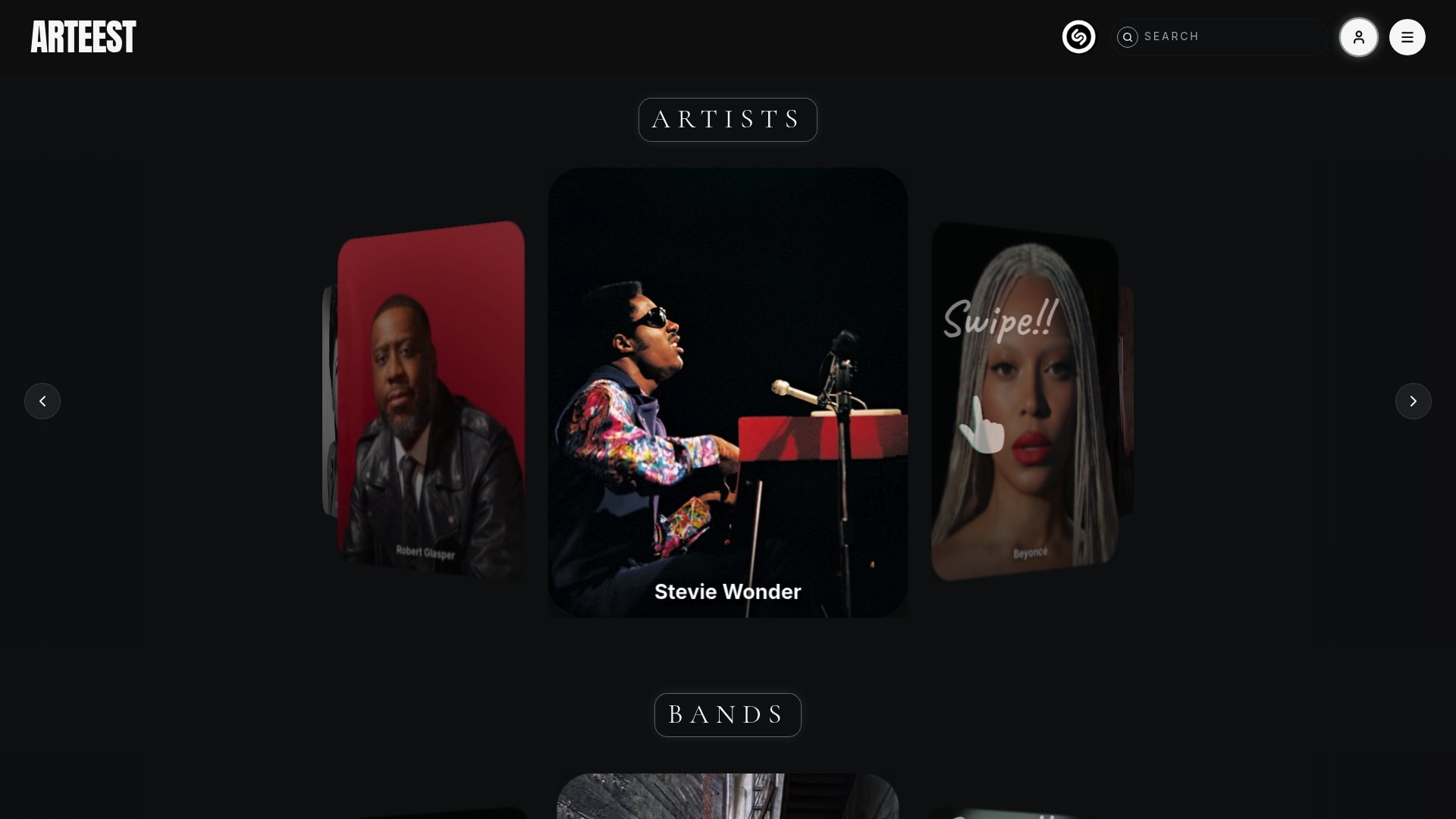
Your personal profile on Arteest lets you build collections and bins of favorite artists, create filterable custom lists, and share them directly to social media or text them to friends as a PNG or video file. If you want to go deeper on specific artists, profiles like Ambrose Akinmusire show exactly how a career unfolds across decades. Explore all artists and start building lists that actually say something.
FAQ
What does music curation mean?
Music curation is the intentional selection and sequencing of tracks to create a purposeful listening experience. It differs from algorithmic recommendation by applying human judgment, cultural context, and editorial voice to the process.
How do curators decide which tracks to include?
Curators evaluate tracks within 15–20 seconds, focusing on the opening hook, production quality, and sonic fit with the playlist’s existing sound. Tracks that fail to grab attention in the first moments are typically rejected regardless of overall quality.
Why do curated music lists matter for artists?
Independent curated playlists signal artist potential to both algorithms and A&R teams months before mainstream recognition. A strong placement on a respected playlist can trigger a compounding cycle of algorithmic amplification and industry attention.
What is the difference between editorial and algorithmic playlists?
Editorial playlists are built by human curators and keep tracks for 1–4 weeks. Algorithmic playlists update daily or weekly based on listener behavior data. Both serve discovery, but editorial lists carry more cultural weight while algorithmic lists offer personalized scale.
How can i start curating music effectively?
Start by developing deep knowledge within one genre, then build playlists with a clear emotional arc rather than simply collecting favorites. Use platforms like Arteest, SubmitHub, and Spotify for Artists to discover tracks, study submission norms, and refine your curatorial voice over time.