

How Music Education Uses Discographies Effectively
July 2, 2026
How Music Education Uses Discographies Effectively
A discography is a chronological catalog of an artist’s or group’s recorded output, and music education uses discographies as foundational tools for mapping artistic growth, building critical listening skills, and grounding students in music history. Resources like the American Discography Project and the Discography of American Historical Recordings (DAHR) give teachers and researchers structured access to thousands of recordings organized by era, artist, and genre. Understanding how music education uses discographies means recognizing them not as simple track lists, but as narrative frameworks that reveal how musicians evolve across decades. This article covers the pedagogical methods, digital tools, and real classroom challenges that define discography-based music learning.
How do discographies enhance music learning and historical understanding?
Discographies provide chronological perspective that no single album or playlist can replicate. When students trace an artist’s output from debut to late career, they see how personal experience, cultural shifts, and industry pressures shape sound and theme. A chronologically mapped discography reveals shifts in sound and themes over decades, giving students a narrative arc rather than isolated listening moments.
This narrative structure directly supports analytical listening. Students who work through a discography learn to ask why a record sounds different from the one before it, not just whether they enjoy it. That shift from passive enjoyment to active analysis is the core goal of music education curriculum and discographies working together.

Discographies also function as cultural touchpoints. Research shows that connecting learning to familiar music narratives lowers students’ affective filters, meaning they become more receptive and absorb complex concepts more readily. A student who already knows Beyoncé’s public persona engages far more deeply when a teacher structures a lesson around her full career arc from Dangerously in Love through Renaissance.
The benefits of using discographies for music learning extend beyond individual artists:
- Chronological context: Students understand why a genre sounds the way it does at a given moment in history.
- Comparative analysis: Placing two artists’ discographies side by side reveals how they responded to the same cultural moment differently.
- Critical vocabulary: Regular engagement with full catalogs builds the language students need to describe timbre, production style, and lyrical development.
- Historical literacy: Discographies tie music to social movements, technology changes, and economic conditions.
Pro Tip: Assign students one artist’s discography for an entire semester rather than sampling across multiple artists. Depth of familiarity produces far stronger analytical writing than breadth.
What are effective teaching methods employing discographies in the music classroom?
The most documented classroom application of discographies is the “Album of the Week” program. Weekly focused listening sessions of approximately one hour improve students’ ability to construct arguments in exams. The method works because it treats an album as a complete artistic statement rather than a collection of singles. Students hear sequencing, production choices, and thematic development as the artist intended.
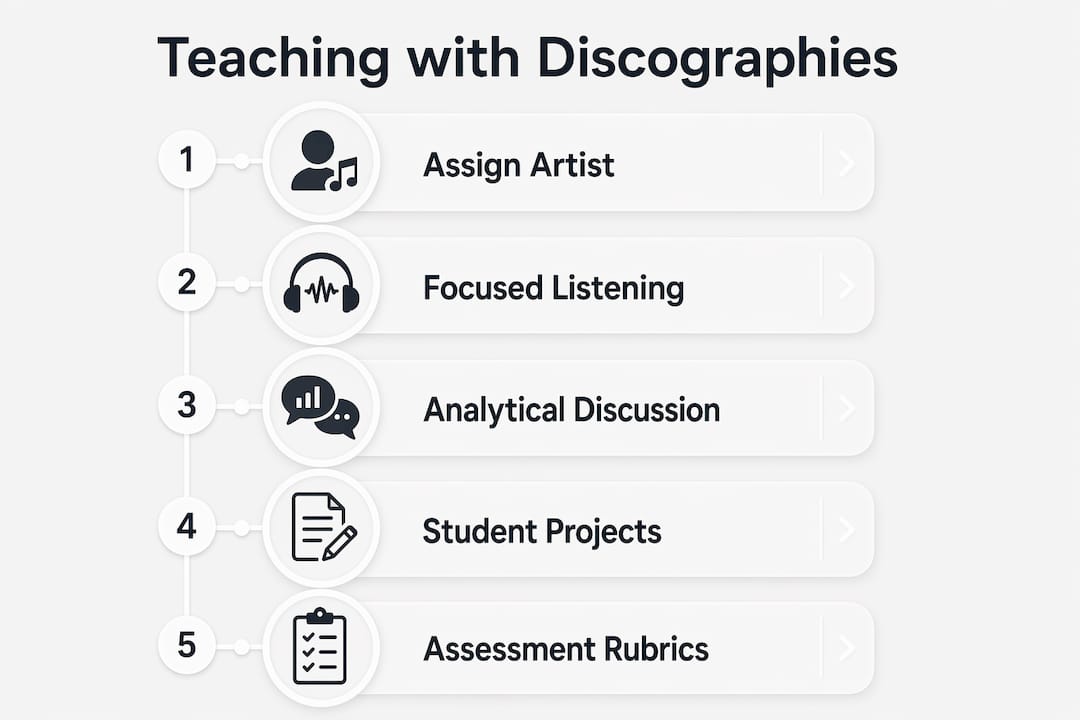
A second method integrates knowledge graphs with discographical data. Knowledge graphs linked to discography cases enable multidimensional competency assessment in flipped classroom models. In practice, a teacher assigns a discography segment as pre-class reading and listening, then uses class time for discussion and analysis rather than passive delivery.
Here is a practical sequence for applying discographies in music lessons:
- Select a focused discography segment. Choose three to five albums from one era of an artist’s career rather than the full catalog. Depth beats breadth at the start.
- Pair recordings with contextual artifacts. Liner notes, production interviews, and contemporary critical reviews shift students from passive listening to active analysis. Contextual materials deepen engagement beyond basic metadata.
- Assign a knowledge graph task. Students map connections between albums, noting production changes, lyrical themes, and collaborators. This builds systematic thinking.
- Run a structured listening session. Play one full album without interruption. Require written observations, not just reactions.
- Facilitate comparative discussion. Students compare their observations across the selected albums and defend interpretations with specific musical evidence.
- Connect to broader history. Ask students to identify one external event, social movement, or technological shift that appears to influence the music in each album.
One critical pitfall to avoid: algorithm-generated playlists group tracks by metadata similarity rather than artistic intent, fragmenting the narrative an album was designed to deliver. Streaming platforms are useful for access, but they are not substitutes for a curated discography.
Pro Tip: Have students build their own discography entry for a living artist, including release dates, collaborators, and one paragraph of historical context per album. The research process itself teaches more than any lecture.
How do digital discography archives support music education research?
Digital archives have transformed access to discographical data for educators and researchers. The DAHR hosts over 30,000 streamed recordings online at no cost, with the project founded in 1964 and available online since 2008. That scale of free access means a high school teacher in rural Montana and a doctoral researcher at Columbia University draw from the same primary source material.
The American Discography Project organizes recordings by label, artist, and date, which maps directly onto how music history courses are structured. A teacher building a unit on early jazz can pull recordings from specific years and labels, then trace how the music changed as it moved from New Orleans to Chicago to New York.
| Resource | Type | Key Feature | Cost |
|---|---|---|---|
| DAHR (Discography of American Historical Recordings) | Academic archive | 30,000+ streamed recordings | Free |
| American Discography Project | Research database | Label and date organization | Free |
| Arteest | Discovery platform | Chronological artist career pages | Varies |
| Lyric.cloud discography guides | Reference tool | Living, updated artist catalogs | Free |
Digital archives also support living discography resources that update as community consensus shifts. A track overlooked at release may gain new significance after a viral moment or a critical reappraisal. Keeping educational material current is a genuine advantage of digital over print discographies.
For jazz education specifically, artist pages like Art Taylor on Arteest present a full career chronologically, giving students a ready-made framework for historical study without requiring a library visit.
What challenges arise when using discographies in music education?
Discography-based teaching carries real pedagogical challenges that educators should address directly rather than work around.
- Balancing rigor with engagement. Maintaining student interest while meeting curriculum standards is the central tension. A discography unit can feel like a history lecture if the teacher does not build in active listening and student-driven inquiry.
- Keeping resources current. A discography printed in a textbook becomes outdated the moment an artist releases new work. Digital resources solve this, but they require teachers to vet sources regularly.
- Distinguishing curated discographies from streaming playlists. Students often arrive believing a Spotify playlist equals a discography. Teaching the difference between algorithmic curation and intentional artistic sequencing is itself a lesson in critical media literacy.
- Motivating independent study. Discography projects require students to engage outside class hours. Without clear structure and meaningful assessment, independent listening tasks produce surface-level responses.
- Scope management. An artist like Bob Dylan has a catalog spanning six decades. Assigning the full discography overwhelms students. Selecting a defined era with clear thematic focus produces better learning outcomes.
The most effective educators treat these challenges as design problems. They build assessment rubrics that reward depth of analysis, not volume of listening. They choose artists whose discographies align with curriculum standards in history, literature, or social studies, making the work multidisciplinary by design.
Key Takeaways
Discographies are the most direct tool music educators have for connecting individual recordings to the full arc of an artist’s creative life.
| Point | Details |
|---|---|
| Chronological structure builds context | Tracing an artist’s full catalog reveals how personal and cultural forces shape musical evolution. |
| Album of the Week drives analysis | Weekly full-album listening sessions improve students’ critical arguments and exam performance. |
| Digital archives expand access | DAHR provides 30,000+ free recordings, giving all educators access to primary source material. |
| Avoid algorithm-driven playlists | Streaming playlists fragment artistic intent; curated discographies preserve the narrative educators need. |
| Living resources stay relevant | Discographies that update over time keep classroom material current with evolving cultural significance. |
Why discographies changed how I think about music teaching
The first time I assigned a full discography unit, I expected students to resist. Instead, the ones who struggled most with traditional music theory became the most engaged. A student who could not read notation wrote three pages on how Beck’s production choices shifted between Odeyssey and Oracle and Mutations. That paper would not have existed without the chronological framework a discography provides.
What I have observed consistently is that discographies give students permission to have an informed opinion. When you can point to a specific album, a specific year, and a specific cultural moment, your argument has weight. Without that structure, music discussion stays at the level of “I like it” or “I don’t.” The discography is what turns preference into analysis.
The mistake I see most often is treating a discography as a reading list rather than a research tool. The Bob Dylan catalog is not a checklist. It is a primary source. Students who approach it that way, asking what changed and why, produce work that surprises even themselves.
The other insight worth sharing: student-led discography projects outperform teacher-assigned ones in almost every case. When a student chooses the artist, they bring existing knowledge and emotional investment. The teacher’s job shifts from delivering content to sharpening the analytical questions. That is a better use of everyone’s time.
— Jorel
Explore full artist discographies on Arteest
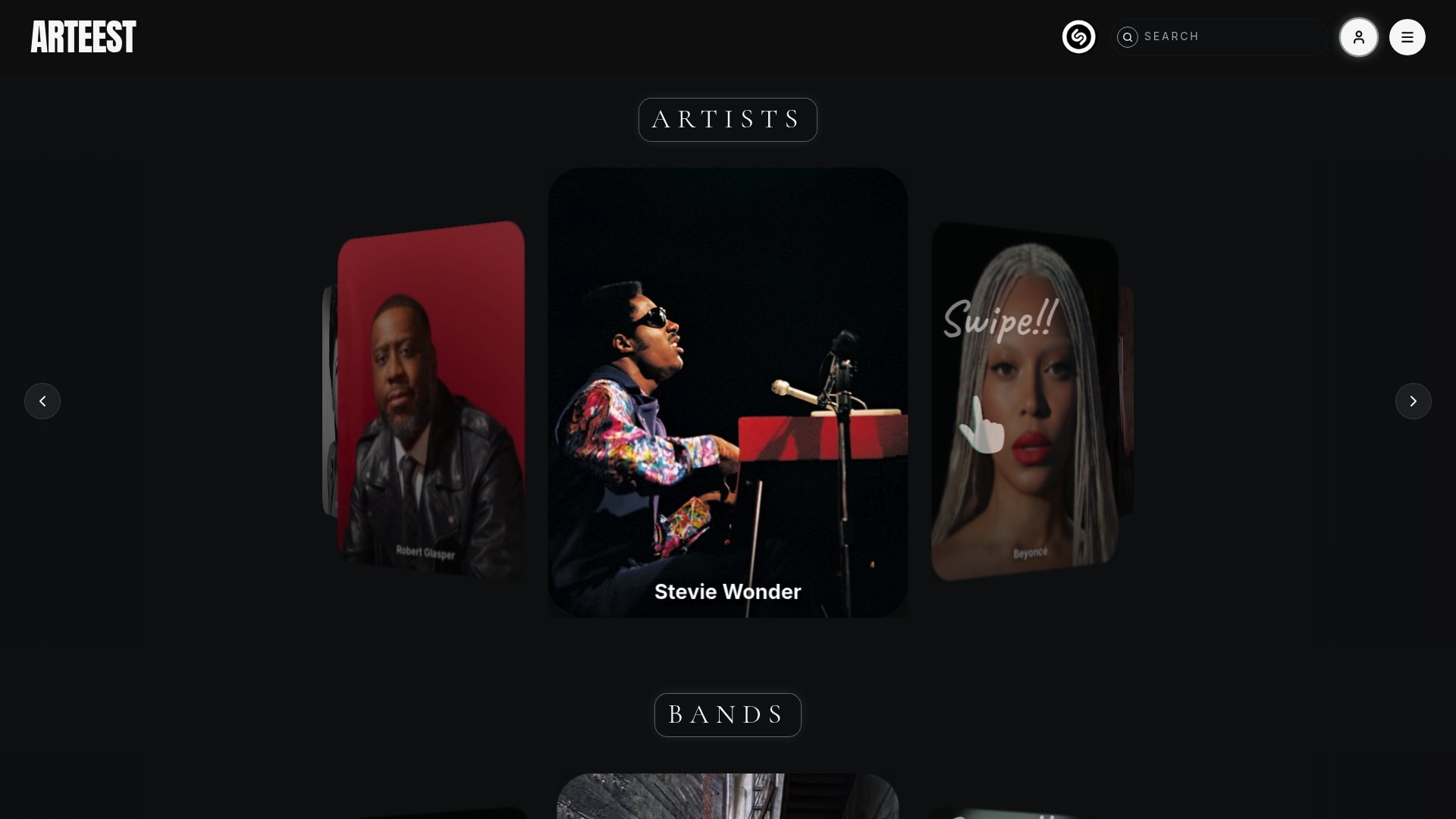
Arteest is a premium music discovery platform built around the idea that every artist’s career deserves a complete, chronological record. Thousands of artists, bands, record labels, producers, and engineers each have their own page on Arteest, showing their full career from first release to latest project. For educators and researchers, that structure maps directly onto how discography-based learning works. You can explore the full artist catalog to find artists that fit your curriculum, or browse by genre to build units around specific musical traditions. Arteest also lets users build personal collections and shareable lists, making it practical for classroom use and student projects.
FAQ
What is a discography in music education?
A discography is a chronological catalog of an artist’s or group’s recorded output. In music education, it serves as a structured framework for tracing artistic development, building critical listening skills, and connecting recordings to historical context.
How do discographies differ from streaming playlists?
Streaming playlists group tracks by algorithmic metadata similarity, not artistic intent. A curated discography preserves the sequencing and narrative an artist designed, which is what makes it educationally valuable for analysis and historical study.
What digital resources support discography-based teaching?
The Discography of American Historical Recordings (DAHR) provides free access to over 30,000 streamed recordings organized by artist, label, and date. Platforms like Arteest offer chronological artist career pages that educators can use directly in curriculum planning.
What is the Album of the Week method?
Album of the Week is a teaching program where students listen to one full album per week in a focused, uninterrupted session of approximately one hour. Research shows this method improves students’ analytical arguments and deepens engagement with music history.
How do you assess students using discography-based projects?
Effective assessment rewards depth of analysis over volume of listening. Rubrics should evaluate students’ ability to connect specific recordings to historical context, identify stylistic shifts across an artist’s catalog, and support interpretations with musical evidence.