
How Music Events Are Catalogued: A Research Guide
July 2, 2026
How Music Events Are Catalogued: A Research Guide
Music event cataloguing is the systematic process of organizing performance metadata using standardized schemas, relational data models, and governance workflows to enable accurate discovery, research, and archival access. Schema.org’s MusicEvent is the industry baseline for this work as of 2026, defining core properties like performer, workPerformed, doorTime, and eventAttendanceMode. Platforms from Google to MusicBrainz rely on these structures to connect live performances to recordings, artists, and venues inside knowledge graphs. For music enthusiasts and researchers, understanding how music events are catalogued means understanding both the technical standards and the human decisions behind them.
What data models and schemas are used in cataloguing music events?
The Schema.org MusicEvent type sits at the top of any serious event cataloging process. It extends the base Event type and adds music-specific properties that generic schemas cannot capture. When a search engine indexes a concert listing, it reads these structured fields to determine who performed, what works were played, and whether the event was in-person or online. MusicEvent enables Google rich results, giving properly catalogued performances significantly better search visibility than listings using a plain Event type.
Beyond Schema.org, the Artsdata network extends MusicEvent with additional classification fields for performance type, production company, and accessibility data. These extensions matter for researchers who need to distinguish a solo recital from a festival headlining set. Artsdata’s linked data approach also assigns persistent URIs to events, which prevents duplicate records across aggregators.

The FRBR framework (Functional Requirements for Bibliographic Records) adds another layer of precision. FRBR categorizes music metadata into four levels: work, expression, manifestation, and item. A Beethoven symphony is a work. A specific live performance of it is an expression. The recording released afterward is a manifestation. The physical CD you own is an item. Without this hierarchy, catalogers routinely conflate performances with recordings, creating orphan records and broken links across databases.
Flat tagging vs. relational models
| Approach | Strengths | Weaknesses |
|---|---|---|
| Flat tagging | Fast to implement, low technical overhead | Cannot represent relationships between works, performances, and recordings |
| Relational model (FRBR) | Precise linking, supports disambiguation | Requires schema design upfront and consistent governance |
| Schema.org JSON-LD | Search engine compatible, widely supported | Limited depth for musicological research without extensions |
Flat tagging works for small personal collections. Any archive intended for research or cross-platform use requires a relational model from day one.
Pro Tip: When building a new event catalog, implement Schema.org MusicEvent as your public-facing layer and FRBR as your internal data model. The two are complementary, not competing.
How do professional catalogers design effective music event taxonomies?
Taxonomy design is where most music event catalogs succeed or fail. The structure you choose on day one determines how much cleanup you face in year three. Professional catalogers follow a set of proven conventions that keep records readable, searchable, and scalable.
The most widely adopted naming convention is the verb-noun pattern, which produces event names like concert_attended, score_archived, or festival_registered. This approach makes taxonomies self-documenting. Anyone reading the catalog immediately understands what the entry represents without needing a separate data dictionary. The verb signals the action; the noun signals the object.
Governance is the second pillar of effective taxonomy design. A tracking plan functions as the single source of truth for all event definitions, property names, and acceptable values. Every new entry passes through a proposed-to-approved review cycle before it enters the master catalog. This review workflow reduces long-term cleanup by 80–90%, adding only 1–2 days per entry while preventing months of retroactive correction.
Here is a practical workflow for building a governed music event taxonomy:
-
Define your event types before collecting any data. Decide whether
festival,club_night, andarena_showare separate types or variants of a singleconcerttype. -
Write a property schema for each event type. Specify required fields (date, venue, performer) and optional fields (setlist, ticket price, attendance count).
-
Assign ownership to each taxonomy section. One person or team approves new entries for live performances; another handles archival records.
-
Run a proposed-to-approved review for every new entry. Reject entries that lack required fields or use non-standard naming.
-
Audit quarterly. Remove duplicate records, standardize venue names, and update deprecated property values.
Operational data belongs in the catalog alongside artistic data. Live performance accuracy requires permits, venue safety records, and technical riders to be linked to the event record. A researcher studying the 1969 Woodstock festival needs the setlist and the stage plot.
Pro Tip: Catalog only high-value events in your master directory. Cataloging minor data points leads to catalog fatigue and obscures the records that actually matter for research.
What challenges arise when cataloguing live music history?
Historical music event documentation is harder than cataloguing current events. Legacy data arrives in inconsistent formats, venue names change over decades, and performers are listed under multiple name variants. These problems compound quickly at scale.
Inconsistent venue and event type disambiguation is the most common source of retroactive cleanup work in live music archives. Enforcing strict schema constraints at the point of data entry saves 5–10 times the effort compared to fixing errors after the fact. That ratio makes upfront schema design one of the highest-return investments in any cataloging project.
The most frequent pitfalls researchers encounter include:
-
Orphan records. An event entry exists with no linked performer, venue, or date. These records are useless for research and expensive to enrich retroactively.
-
Name variant collisions. “The Rolling Stones,” “Rolling Stones,” and “R. Stones” all refer to the same entity but create three separate catalog threads without authority control.
-
Date ambiguity. Events that span midnight or run across multiple days are frequently logged with the wrong date, breaking chronological sorting.
-
Venue conflation. The same physical location operating under different names at different times (Madison Square Garden vs. MSG) generates duplicate venue records unless a persistent identifier links them.
-
Missing provenance. Records that lack a source citation cannot be verified, which disqualifies them from serious archival use.
The solution to most of these problems is a hierarchical relational metadata structure. Link every performance record upward to a performer entity and downward to any associated recordings. MusicBrainz uses exactly this model, assigning MBIDs (MusicBrainz Identifiers) to artists, releases, and events as persistent, globally unique identifiers. Retroactive disambiguation becomes tractable when you can query by MBID rather than by name string.
Metadata should be treated as a living system with overlapping, collection-based categories rather than rigid physical filing structures. This approach allows a single event record to belong to multiple taxonomic categories simultaneously, which is how real music history works.
How do digital platforms and tools help track music events?
Several platforms have built purpose-built infrastructure for the event cataloging process. Each addresses a different layer of the problem.
Snowplow’s Event Catalog is designed for teams managing large volumes of event specifications across multiple data systems. A centralized event catalog provides search, filtering, and status tracking across all event definitions. For music organizations managing hundreds of event types across streaming, ticketing, and archival systems, this kind of governance layer prevents duplication and keeps metadata consistent. It also accelerates onboarding: new researchers can browse the full catalog rather than reverse-engineering undocumented schemas.
Tessitura (the open-source music library tool, not the arts CRM) combines scanning, identification, enrichment, and database indexing into a single workflow. Tessitura pulls metadata from MusicBrainz, Wikidata, and Last.fm with full provenance tracking, meaning every enriched field records where its value came from. That provenance chain is critical for archival credibility.
| Platform | Primary Use | Key Metadata Sources |
|---|---|---|
| Snowplow Event Catalog | Governance and team collaboration | Internal tracking plans |
| Tessitura (music-comp) | Library enrichment and indexing | MusicBrainz, Wikidata, Last.fm |
| MusicBrainz | Artist and release authority control | Community-contributed, MBID-linked |
| Schema.org JSON-LD | Public-facing search visibility | Self-declared, search engine readable |
| Artsdata | Linked data for performing arts | Aggregated from cultural institutions |
Rich structured metadata does more than support research. It powers discovery. When performer and workPerformed fields are properly populated in a MusicEvent schema, search engines can surface a specific concert in response to queries like “Radiohead live 2003 setlist.” Without those fields, the same record is invisible to automated systems. Structured metadata is the difference between an archive and a searchable database.
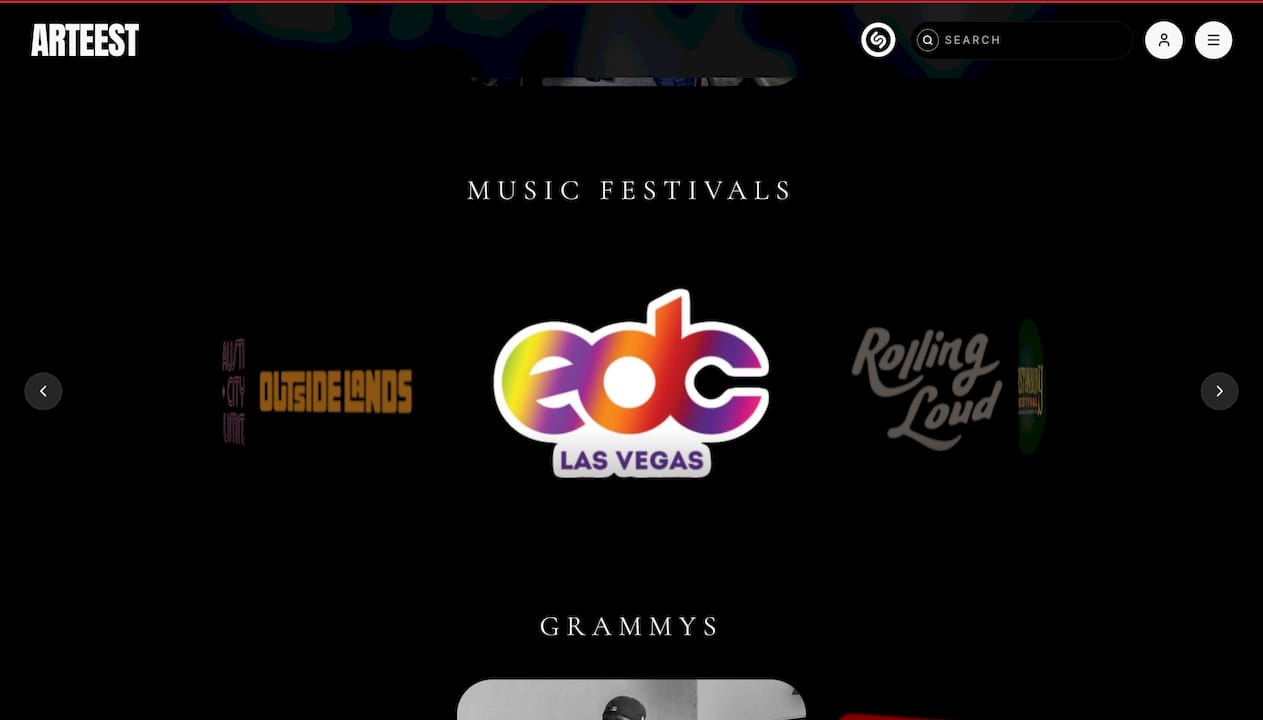
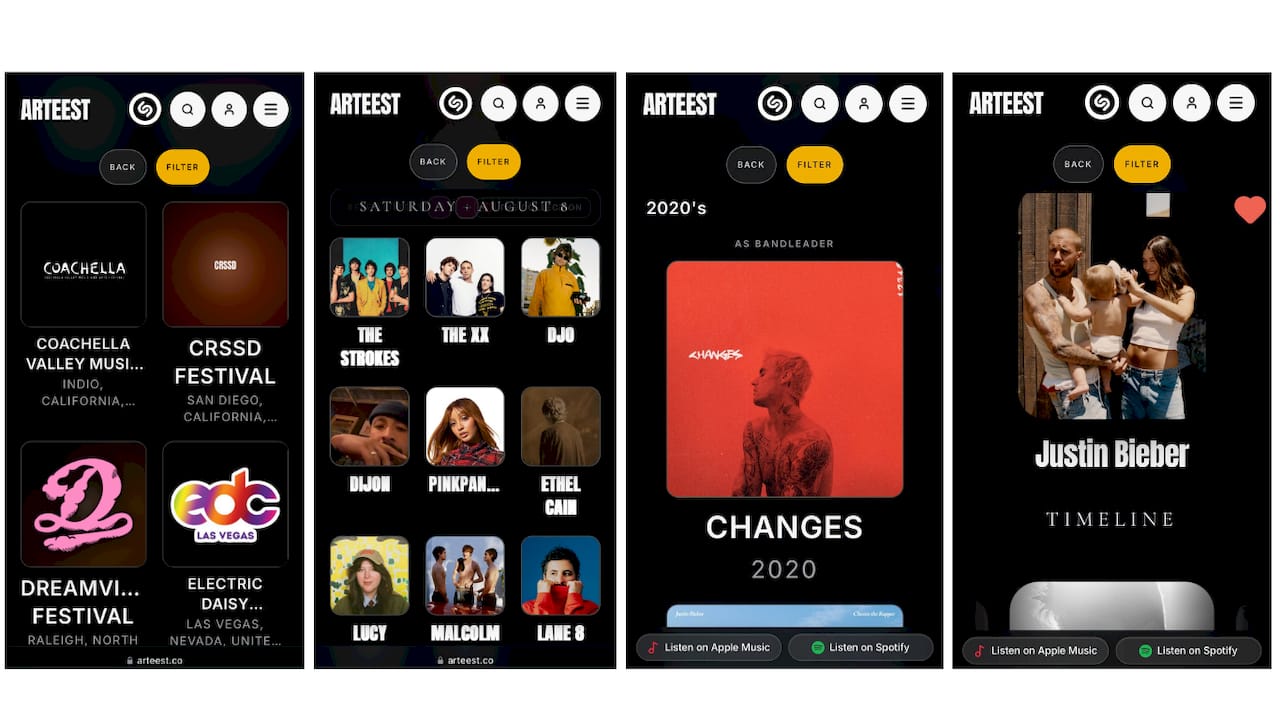
Pro Tip: Use Arteest’s genre and artist pages as reference points when standardizing performer and genre fields in your own catalog. Consistent classification across platforms improves cross-system data interoperability.
Key takeaways
Effective music event cataloguing requires standardized schemas, relational data models, and governed workflows working together from the point of data entry.
| Point | Details |
|---|---|
| Schema.org MusicEvent is the baseline | Use it for all public-facing event records to enable search engine visibility and knowledge graph connections. |
| FRBR prevents conflation | Apply the work-expression-manifestation-item hierarchy to separate performances from recordings in research archives. |
| Governance cuts cleanup costs | A proposed-to-approved review workflow reduces long-term data correction by 80–90%. |
| Enforce constraints at entry | Strict schema validation at the point of data entry saves 5–10 times the retroactive cleanup effort. |
| Operational data belongs in the catalog | Permits, venue logistics, and technical riders are part of a complete live performance record. |
Why cataloguing live music still feels like an unsolved problem
I have spent years watching well-intentioned music archives collapse under their own inconsistency. The technical standards exist. Schema.org, FRBR, MusicBrainz, they are all mature and well-documented. The failure almost always happens at the governance layer, not the schema layer.
The uncomfortable truth is that most music event catalogs are built by people who love music, not people who love data governance. That combination produces beautiful collections with catastrophic metadata. A festival archive with 10,000 events and no authority control on venue names is not a research resource. It is a pile of anecdotes.
What I have found actually works is treating the catalog as a product, not a project. Products have owners, versioning, and quality standards. Projects get finished and abandoned. The best music archives I have seen, including the MusicBrainz community’s ongoing work, operate with the discipline of a software team: documented schemas, peer review for new entries, and regular audits.
The other thing most guides miss is the artistic-operational divide. Researchers want setlists and performer credits. Event producers want permits and safety certifications. Both sets of data belong in the same record, linked by a shared event identifier. The catalogs that serve both audiences are the ones that survive long enough to matter.
If you are starting a cataloging project today, pick Schema.org MusicEvent as your public schema, FRBR as your internal model, and commit to a review workflow before you enter a single record. The first 100 entries set the standard for the next 100,000.
— Jorel
Discover music history the way it was meant to be found
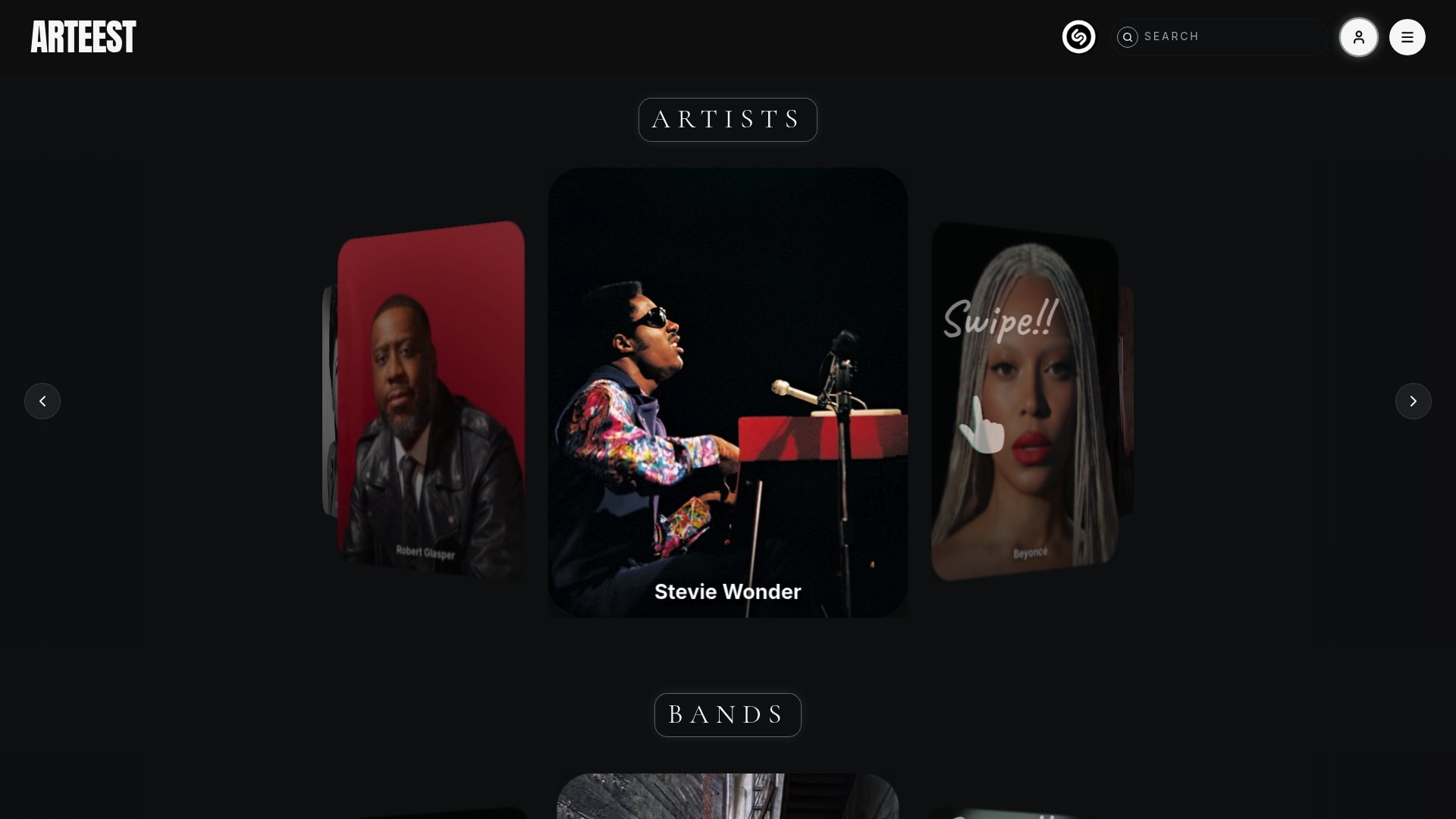
Arteest is built on the same principles that make great music event catalogs work: rich metadata, chronological organization, and artist-first structure. Every artist, band, record label, producer, and engineer on Arteest has a dedicated page showing their full career in sequence. You can browse all artists and all bands with metadata-rich profiles that reflect professional cataloging standards. Build your own collections, organize them into shareable bins, and export directly to social media or text. For researchers and enthusiasts who care about how music history is documented, Arteest is where that documentation comes to life.
FAQ
What is Schema.org MusicEvent used for?
Schema.org MusicEvent is the standard metadata type for cataloguing online music events, used by search engines and aggregators to index performer, venue, and setlist data for rich search results.
How does FRBR apply to music event cataloguing?
FRBR separates music metadata into work, expression, manifestation, and item levels, preventing catalogers from conflating a live performance with its studio recording or physical release.
What is the verb-noun naming convention in event taxonomy?
The verb-noun convention names catalog entries as action-object pairs, such as concert_attended or score_archived, making taxonomies self-documenting and easier to navigate across teams.
How do you avoid duplicate records in a music event archive?
Assign persistent identifiers like MusicBrainz MBIDs to artists, venues, and events at the point of entry, and enforce strict schema constraints to catch name variants and date ambiguities before they create orphan records.
Which tools support professional music event cataloguing?
Tessitura enriches music library records using MusicBrainz, Wikidata, and Last.fm with provenance tracking. Snowplow’s Event Catalog handles governance and cross-team collaboration for large-scale event metadata systems.