
How to Rediscover Music Passion and Love It Again
July 2, 2026
How to Rediscover Music Passion and Love It Again
Rediscovering music passion is defined as the active, ongoing practice of rebuilding your emotional relationship with music rather than simply improving your technical skill. Most people who lose that spark assume they need to practice harder or find the “right” song. The real answer is different. Music rediscovery is about treating music as a life practice that fits who you are right now, not who you were at 16. This article gives you the exact methods to reignite music interest through human curation, low-pressure habits, genre exploration, and social listening.
How to rediscover music passion through human curation
Algorithms are convenient. They are also the fastest way to get stuck. Streaming platforms build what researchers call “musical microclimates,” feeding you variations of what you already know. Algorithmic feeds limit genre diversity and artist range in ways most listeners never notice until they realize they have heard the same 40 songs for two years straight.
Human curation breaks that cycle. Friend and DJ recommendations produce more surprising and diverse music exposure than any algorithm. The reason is simple: a person who knows you can hand you something genuinely unexpected, something a recommendation engine would never risk suggesting.
Here are the most effective human-curated discovery paths:
- Ask a specific person. Not “what should I listen to?” but “what is the one album you have played most this month?” Specificity gets you real answers.
- Follow music writers and radio DJs. Curators at stations like KEXP or writers at publications like Pitchfork build their entire identity around finding music worth your time.
- Dig into physical media. Record stores and library CD sections surface artists that never trend online. The friction of browsing is the point.
- Use community-driven playlists. Genre forums and music subreddits contain playlists built by obsessive listeners, not engagement algorithms.
- Revisit old mixtapes or burned CDs. Someone made those for a reason. That reason is still valid.
Pro Tip: Set a rule for yourself: one new artist per week, sourced from a human being, not a platform. Write the name down. Listen to a full album, not just the top track.
The goal is intentional friction. Seeking diverse recommendations outside your comfort zone produces real discovery. Passive listening produces familiarity. Those are not the same thing.

What are the psychological barriers to rekindling music interest?
The biggest obstacle to reigniting music interest is perfectionism. Most people who step away from music, whether as listeners or players, do so because music started to feel like work. They measure every session against an imaginary standard and quit when they fall short.
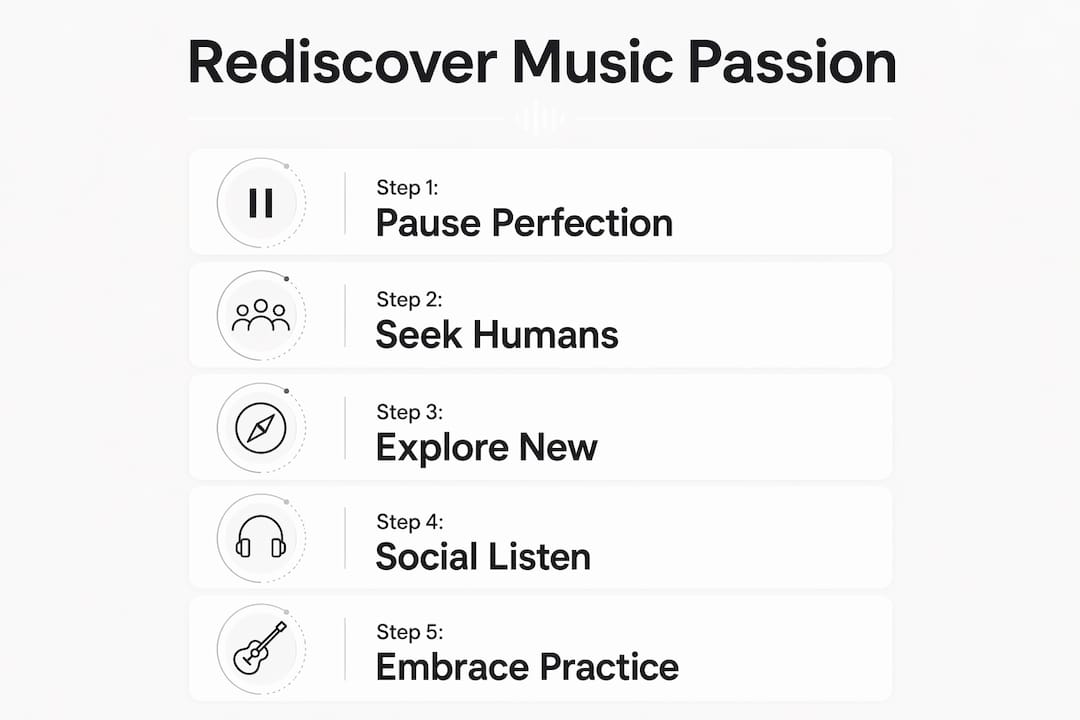
The fix is not motivation. The fix is removing the conditions that create pressure. Experts recommend 5–10 minute frictionless sessions with your instrument or a focused listening practice. Short, pressure-free interactions rebuild consistency without triggering the frustration loop that caused the break in the first place.
Here is a practical sequence for rebuilding your music practice from scratch:
- Pick a time with zero stakes. Morning coffee, a lunch break, or the last 10 minutes before bed. No performance, no audience.
- Play or listen without a goal. No scales, no playlists to finish. Just sound.
- Notice what you feel, not what you produce. Curiosity is the metric, not quality.
- Move on without guilt. Allowing yourself to feel indifferent toward tracks that do not connect keeps your curiosity loop active. Most new music will not become an obsession. That is normal.
- Repeat the next day. Consistency at low intensity beats intensity at low consistency every time.
“Success in rediscovery is measured by consistent connection and presence, not just ability.” — Alice Bulmer Music
Music reconnection also repairs identity. When you step away from music for years, you lose a part of how you understand yourself. Returning, even quietly, restores that. The emotional benefit arrives before the skill does.
How do you broaden your musical horizons to sustain passion?
Broadening your listening is not about forcing yourself to like jazz if you hate jazz. It is about matching your current mental state to a genre you have not fully explored yet. High energy and restless? Try post-punk or afrobeat. Quiet and introspective? Ambient or bossa nova. Your mood is a compass.
The table below shows how to map listening contexts to discovery strategies:
| Listening context | Discovery strategy | What it surfaces |
|---|---|---|
| High energy, active | Post-punk, afrobeat, drum and bass | New rhythmic frameworks |
| Calm, focused | Ambient, jazz, classical | Structural and harmonic depth |
| Nostalgic | Deep cuts from a favorite artist’s catalog | Forgotten personal connections |
| Social, shared | Genre-adjacent artists to a mutual favorite | Common ground and new branches |
| Exploratory | Radio, live sets, archival recordings | Unexpected finds outside your taste map |
Following the creative network around an artist you already love is one of the most reliable ways to find new music. If you love Armin van Buuren, trace his collaborators, his label roster, and the producers he credits. Every artist exists inside a web of influence. Pull one thread and you find ten more.
Live shows and radio sets also deliver discovery that playlists cannot replicate. A DJ set is a curated argument for why these songs belong together. Hearing music in that context changes how you receive it. AI tools now assist in surfacing lost and archived recordings that never made it onto streaming platforms, which opens an entirely different layer of discovery for dedicated listeners.
Pro Tip: Browse all genres on Arteest and pick one you have never intentionally explored. Spend 20 minutes with it before deciding how you feel.
Why does social listening accelerate music rediscovery?
Listening with other people changes what you hear. Social and contextual listening forms deeper neuro-emotional associations with music than solo background listening. When you hear a song for the first time at a concert, a friend’s apartment, or a road trip, that context becomes part of the song. You cannot replicate that by yourself on a Tuesday afternoon.
Communal music experiences accelerate rediscovery in specific ways:
- Jam sessions and open mics force you to play music in real time with real stakes. The social pressure is low enough to be fun and high enough to keep you engaged.
- Music communities and forums expose you to listeners who are as obsessive as you used to be. Their enthusiasm is contagious.
- Sharing music directly deepens your own appreciation. Explaining why you love a track forces you to articulate what you actually hear in it.
- Attending live shows in genres you do not know well puts you in a room full of people who do. You absorb their context.
Rediscovery often happens in new life contexts. A new city, a new relationship, a new job. These shifts create openings for music to attach to fresh emotional territory. You do not need to wait for a life change to create that effect. You can manufacture it by changing where and with whom you listen.
The brain’s seeking system also plays a role here. Intermittent reinforcement from finding rare musical gems activates the same reward circuitry that makes any hunt compelling. The unpredictability of discovery is not a bug. It is the engine. Shared discovery amplifies that reward because you get to experience someone else’s reaction alongside your own.
Pro Tip: Text a friend one song this week with no explanation. Then ask what they heard in it. The conversation that follows will tell you more about both of you than a playlist ever could.
Key Takeaways
Rediscovering music passion requires treating music as an ongoing personal practice, not a skill to perfect or a project to complete.
| Point | Details |
|---|---|
| Human curation beats algorithms | Ask friends, follow DJs, and browse physical media to find music outside your echo chamber. |
| Low-pressure sessions rebuild habit | Five to ten minutes of frictionless daily music interaction prevents frustration and restores consistency. |
| Match genre to mental state | Align your listening to your current energy level to sustain long-term interest and avoid stagnation. |
| Social listening deepens connection | Hearing music with others creates emotional associations that solo listening cannot replicate. |
| Curiosity over perfectionism | Moving on from tracks that do not connect, without guilt, keeps your discovery loop active and alive. |
The part nobody tells you about coming back to music
Most advice about reigniting your music passion focuses on technique: practice more, try new genres, join a band. That advice is not wrong. It is just incomplete.
What I have found, after years of watching people fall in and out of love with music, is that the real barrier is permission. People feel guilty for having left. They think they have to earn their way back through discipline or catch up on everything they missed. That guilt is the actual problem. It sits between you and the music and makes every session feel like a test you are failing.
The shift that actually works is simpler. Stop measuring. Stop performing, even for yourself. Sit with music the way you would sit with an old friend you have not seen in years. You do not need to explain the gap. You just pick up where you left off, or you start somewhere new entirely. Both are fine.
Your musical identity is not fixed. The version of you that loved a specific genre at 22 is not the version of you listening now. Trying to recreate that exact feeling is a dead end. The better move is to get curious about who you are musically right now. That question, taken seriously, leads somewhere genuinely interesting.
Patience is not passive. It is the active choice to stay in the room with music even when nothing clicks immediately. The hunt for a rare musical find is its own reward. You do not need to arrive anywhere. You just need to keep looking.
— Jorel
Arteest and the art of intentional music discovery
Rediscovering music works best when you have a place to actually do the exploring.
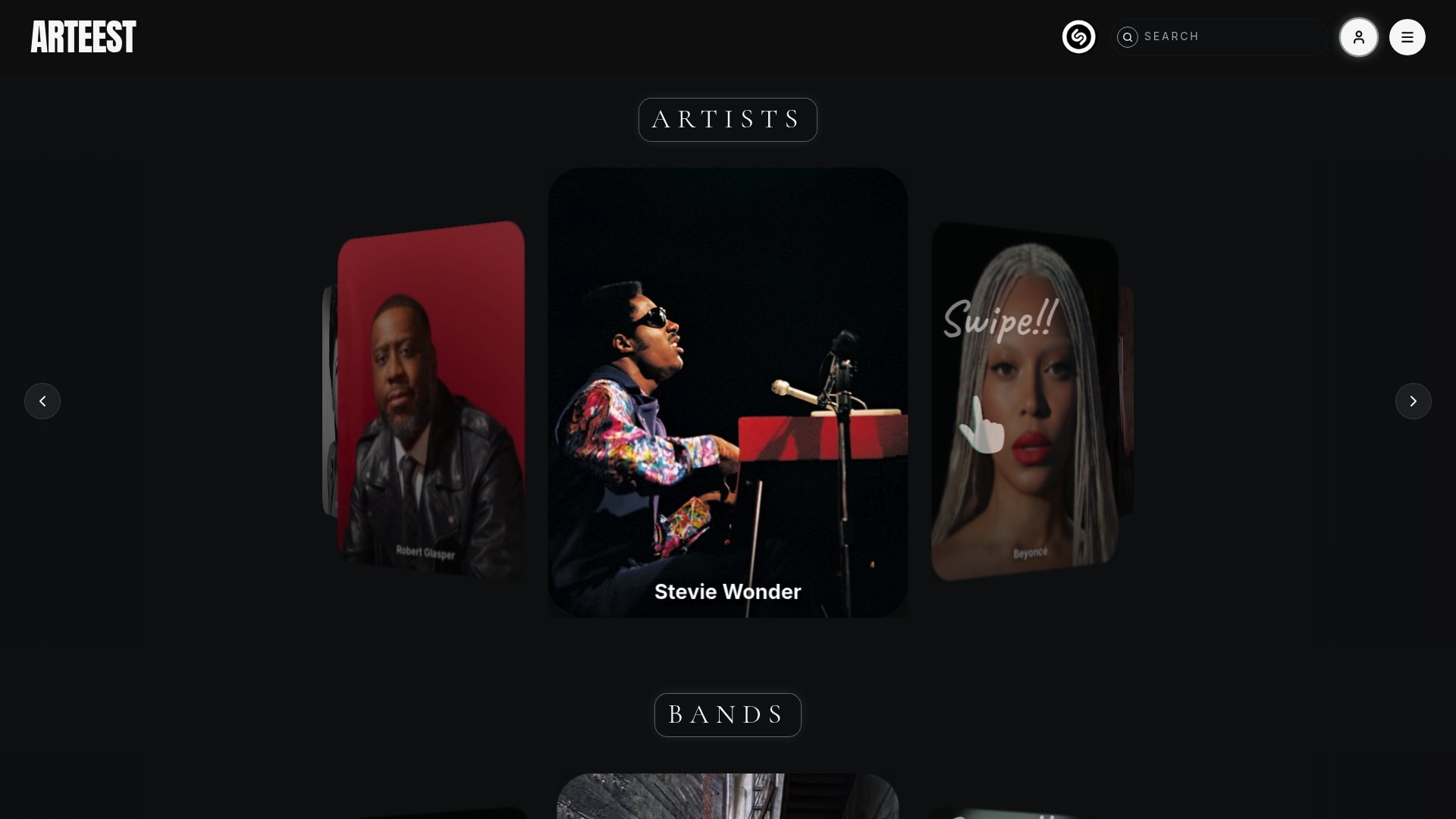
Arteest is a premium music discovery platform built for exactly this. Every artist, band, record label, producer, and engineer has their own page showing their complete career in chronological order. You can trace an artist’s full arc, follow their collaborators, and build personal collections organized into bins and filterable lists. Those lists export as shareable PNG or video files you can send directly to friends or post to social media. If you are serious about finding new artists to love, Arteest gives you the depth that streaming platforms were never designed to provide.
FAQ
What does it mean to rediscover your music passion?
Rediscovering music passion means rebuilding your emotional relationship with music as an ongoing practice rather than chasing a past feeling or improving a skill. It focuses on connection, curiosity, and presence over performance.
Why do people lose their passion for music?
Perfectionism, routine, and algorithmic repetition are the three most common causes. When music starts to feel like obligation or every session sounds the same, engagement drops.
How long does it take to reignite music interest?
There is no fixed timeline. Experts recommend starting with 5–10 minute daily sessions to rebuild consistency without pressure. Most people notice a shift within a few weeks of low-stakes, regular engagement.
Does social listening really help you rediscover music?
Yes. Social and contextual listening creates deeper emotional associations with music than solo listening. Hearing a song for the first time with someone else changes how you receive and remember it.
What is the best way to find new music outside streaming algorithms?
Ask a specific person for one album they have loved recently, follow radio DJs and music writers, and browse physical media or community-driven playlists. Human-curated discovery consistently produces more diverse and surprising results than algorithmic feeds.