

Music Discovery Platform Explained: Your 2026 Guide
July 2, 2026
Music Discovery Platform Explained: Your 2026 Guide
A music discovery platform is a service that uses algorithms, editorial curation, and social signals to recommend new music personalized to each listener’s taste. Platforms like Spotify Discover Weekly, Apple Music New Music Mix, and YouTube Music Discover Mix have made finding new artists faster and more accurate than any radio DJ ever could. The best services combine three distinct mechanisms: algorithmic recommendations, human editorial playlists, and community-driven social discovery. Understanding how each one works gives you a real edge in finding music you will actually love. This is your music discovery platform explained from the inside out.
How do music discovery platforms recommend new tracks?
Music recommendation systems rely on two core techniques: collaborative filtering and content-based analysis. Most platforms use both together in what engineers call a hybrid model. Spotify’s acquisition of Echo Nest in 2014 gave it a major head start in audio feature analysis, and that advantage still shows up in its recommendations today.
Collaborative filtering works by finding listeners whose taste overlaps with yours. If you and another listener share 40 songs, the system assumes tracks they love that you have not heard yet are worth surfacing to you. This approach works well for popular music but struggles with new or obscure releases that have little listening data attached to them.

Content-based analysis solves that problem. Platforms analyze raw audio features including tempo, key, loudness, and danceability to describe a track mathematically. Audio analysis of new tracks lets the system recommend songs with limited prior streams, which directly addresses the cold start problem. A brand new artist with 200 plays can still land in your recommendations if their sonic profile matches your history.
How implicit feedback shapes your recommendations
Your listening behavior teaches the algorithm more than you realize. Implicit feedback signals like skips, saves, and playlist adds carry heavy weight in the recommendation engine. A quick skip within the first 15 seconds registers as strong negative feedback. That single action steers future recommendations away from similar tracks.
Saves and playlist adds work in the opposite direction. They tell the system you want to hear more music like that track. The algorithm also tracks queue additions and repeat plays. Every micro-action you take is a data point the system uses to refine its model of your taste.
Spotify Discover Weekly refreshes every Monday with 30 tracks built from this combination of collaborative filtering and implicit feedback. The playlist balances what you already know you like with genuine new discoveries, using a model Spotify calls BaRT. That balance between familiar and unfamiliar is what separates a good recommendation system from a great one.
Pro Tip: Save tracks you like immediately after hearing them. That single action sends a strong positive signal to the algorithm and accelerates how quickly it learns your taste.
One important nuance: placement in algorithmic playlists like Discover Weekly cannot be bought or pitched directly. The system selects tracks based on early audience engagement and listener similarity. Artists who build genuine early fans get rewarded with wider algorithmic reach. That reactive design keeps recommendations honest.
What are the roles of editorial curation and social discovery?
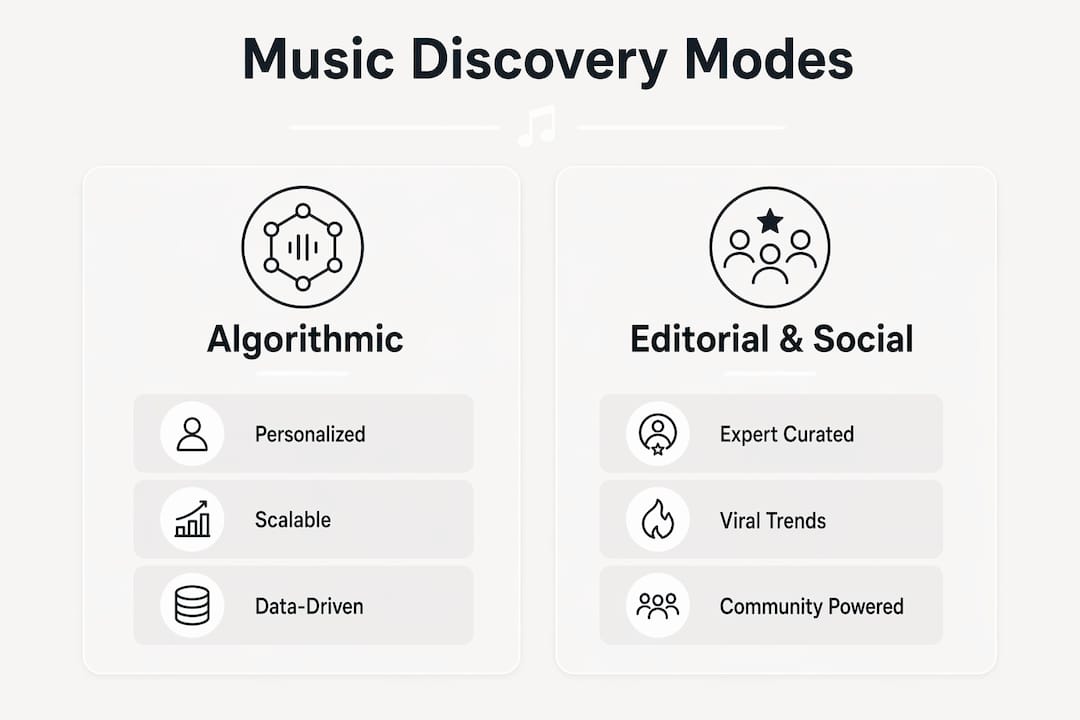
Algorithms are powerful, but they have blind spots. They optimize for what you have already shown you like, which can create a feedback loop that narrows your taste over time. Algorithmic recommendation systems actively shape listener taste by modeling predictions and reinforcing existing preferences. Human curation and social discovery break that loop.
Editorial playlists are built by music experts who track emerging artists, regional scenes, and genre crossovers that an algorithm would miss. Spotify’s editorial team, Apple Music’s curators, and independent blogs like Pitchfork all surface music based on cultural context, not just sonic similarity. That human judgment adds a layer of discovery that no recommendation engine fully replicates.
Social discovery operates differently. Platforms like TikTok drive viral music discovery via short clips, where a 15-second video can send an obscure track to millions of listeners overnight. Community playlists, shared listening sessions, and friend activity feeds on streaming platforms add another social layer. Music spreads through social networks in ways that neither algorithms nor editors can predict.
| Discovery type | Strength | Limitation |
|---|---|---|
| Algorithmic | Personalized, scales to millions of listeners | Creates feedback loops, struggles with new releases |
| Editorial | Cultural context, genre expertise, artist discovery | Limited scale, subjective taste of curators |
| Social | Viral reach, community trust, real-time trends | Unpredictable, often genre-specific bubbles |
Combining all three discovery modes produces the broadest and most diverse listening experience. Relying on only one method leaves significant music undiscovered. The listeners who find the most interesting music are the ones who treat all three as tools, not substitutes.
What features do top music platforms offer for music discovery?
Leading streaming platforms each approach discovery differently, and knowing what each one offers helps you use them more effectively. Here is a breakdown of the most useful discovery features available right now.
Spotify
- Discover Weekly: 30 personalized tracks refreshed every Monday
- Release Radar: New releases from artists you follow, updated every Friday
- Daily Mixes: Six genre-based playlists built from your listening history
- Radio: Endless stations seeded from any track, artist, or playlist
Apple Music
- New Music Mix: A personalized playlist of new releases updated weekly
- Friends Mix: Tracks your Apple Music friends are listening to
- Curated stations by genre and mood, built by Apple’s editorial team
- Replay: Annual listening data broken down by artist and genre
YouTube Music
- Discover Mix: A weekly personalized playlist similar to Discover Weekly
- New Release Mix: New tracks from artists in your library
- Video-based discovery that surfaces live performances, remixes, and covers unavailable on audio-only platforms
Other notable features across platforms
- Mood and activity-based playlists (workout, focus, sleep)
- Genre radio stations for exploring music genres online
- Artist radio that branches out from a single artist into related acts
- Social sharing tools that let you send playlists directly to friends
Arteest takes a different approach entirely. Instead of algorithmic playlists, Arteest gives every artist, band, record label, producer, and engineer their own page showing their complete career in chronological order. You can browse all genres on Arteest or build personal collections and bins of favorite artists. Those collections are stack filterable and exportable as PNG or .mov files to share directly to social media or text to friends.
How can listeners get more out of music discovery?
Getting better recommendations is an active process, not a passive one. The more intentional you are with your listening behavior, the faster the algorithm learns what you actually want.
-
Save and skip deliberately. Every save tells the algorithm to find more music like that track. Every early skip tells it to avoid similar sounds. Treat your listening session as a conversation with the system.
-
Use editorial playlists as a starting point. Spotify’s editorial playlists, Apple Music’s curated stations, and independent music blogs like Pitchfork or The Needle Drop introduce music the algorithm would never surface on its own. Start there, then let the algorithm follow your engagement.
-
Engage with social discovery. Follow music communities on Reddit (r/ifyoulikeblank is excellent), check TikTok for trending tracks, and ask friends for recommendations. Social discovery surfaces music that exists outside your algorithmic bubble.
-
Try multiple platforms. Spotify, Apple Music, and YouTube Music each use different recommendation models. A track that never appears in your Spotify recommendations might show up immediately in your YouTube Music Discover Mix. Using two platforms doubles your discovery surface area.
-
Be patient with new accounts. Spotify’s recommendation system functions as a matchmaker between creators and listeners, optimizing for engagement over time. A new account needs several weeks of listening data before recommendations become genuinely accurate.
Pro Tip: Create a dedicated “discovery playlist” and add every new track you want to evaluate. Revisit it weekly and save the keepers. This habit trains the algorithm faster than passive listening ever will.
Algorithmic literacy remains low among most listeners despite daily interaction with these systems. Listeners who understand how feedback loops work get dramatically better recommendations than those who treat the algorithm as a black box. The system rewards engagement. Give it clear signals and it will return the favor.
Key takeaways
A music discovery platform works best when you combine algorithmic playlists, editorial curation, and social discovery rather than relying on any single method alone.
| Point | Details |
|---|---|
| Algorithms use hybrid models | Collaborative filtering and audio analysis work together to personalize recommendations. |
| Implicit feedback drives accuracy | Saves, skips, and playlist adds teach the algorithm your taste faster than any setting. |
| Editorial curation fills the gaps | Human curators surface cultural context and emerging artists that algorithms miss. |
| Social discovery breaks feedback loops | TikTok, Reddit, and friend activity expose music outside your algorithmic bubble. |
| Active engagement improves results | Deliberate saves and skips accelerate how quickly any platform learns your preferences. |
Why most listeners are using these platforms wrong
I have spent years watching people complain that their Discover Weekly is stale or that Spotify keeps recommending the same five artists. Almost every time, the problem is not the algorithm. The problem is passive listening.
Most listeners treat recommendation systems like a radio station. They let music play without saving, skipping, or engaging. Then they wonder why the recommendations never improve. Many listeners interact routinely with recommendations without understanding the underlying process. That gap between interaction and comprehension is where most discovery potential gets lost.
The feedback loop issue is real and worth taking seriously. When an algorithm only shows you music similar to what you already love, your taste narrows without you noticing. I have seen listeners who genuinely believe they only like four genres discover entirely new sounds the moment they start using editorial playlists and social discovery alongside their algorithmic feeds.
The future of music discovery is not a better algorithm. It is listeners who know how to use the tools available to them. Platforms like Arteest are building toward that by giving listeners full visibility into an artist’s complete career rather than just surfacing the three tracks an algorithm thinks you want. That kind of depth changes how you relate to music entirely.
— Jorel
Arteest: a different way to find your next favorite artist
Arteest is a premium music discovery platform built for listeners who want more than a weekly playlist. Every artist, band, record label, producer, and engineer on the platform has their own page displaying their complete career in chronological order. You see the full arc of an artist’s work, not just the tracks an algorithm decided to surface.
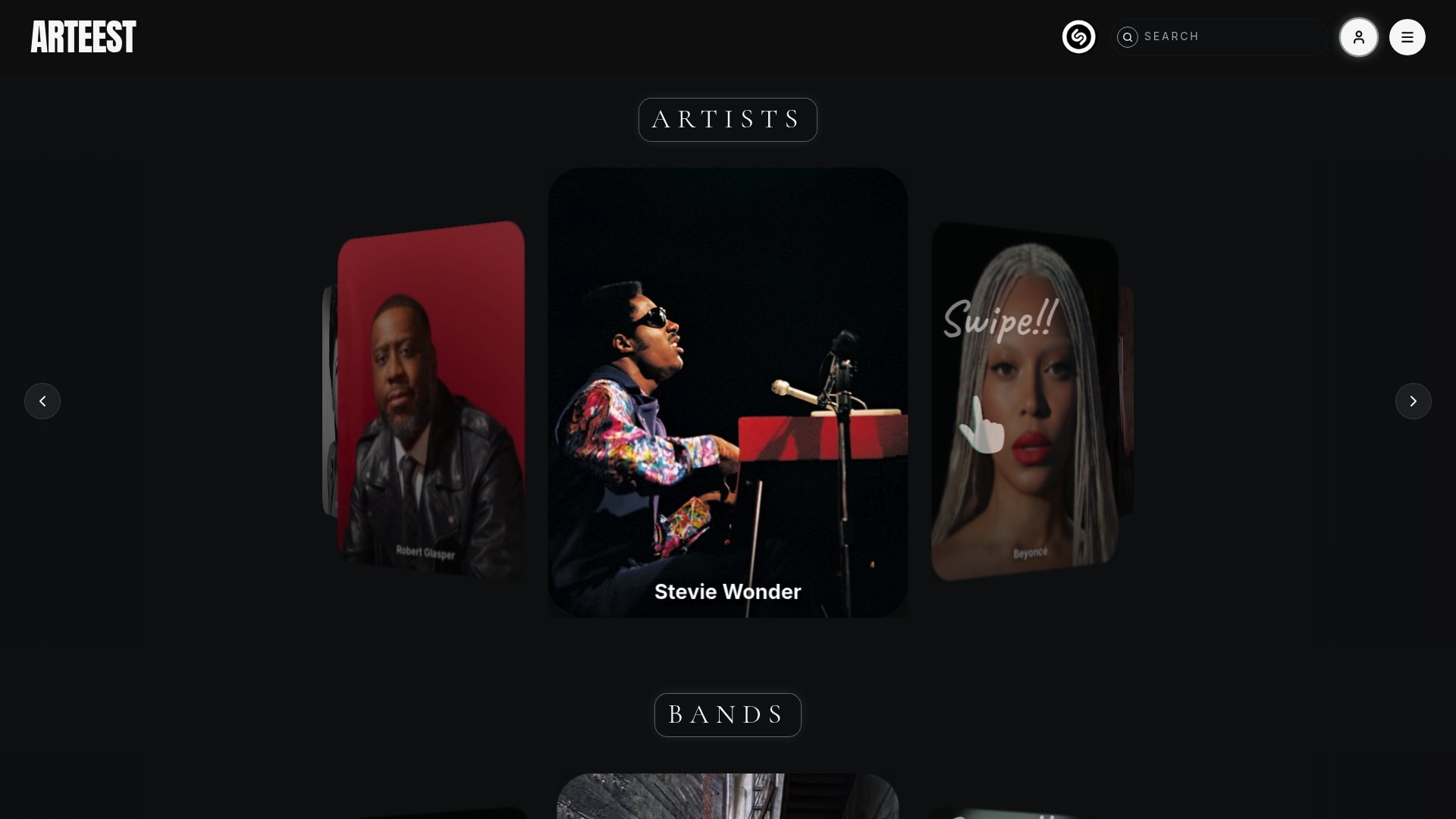
Personal profile pages let you build collections and bins of favorite artists. Lists are stack filterable and exportable as PNG or .mov files to share directly to social media or send to friends. Browse all artists on Arteest and start building a music library that actually reflects your taste. Whether you are deep into jazz, electronic, or anything in between, Arteest gives you the context and depth that streaming algorithms leave out.
FAQ
What is a music discovery platform?
A music discovery platform is a service that recommends new music to listeners through algorithms, editorial curation, or social sharing. Examples include Spotify Discover Weekly, Apple Music New Music Mix, and Arteest.
How do music discovery algorithms work?
Music discovery algorithms combine collaborative filtering (matching you with listeners who share your taste) and content-based analysis (matching tracks by audio features like tempo and key). Implicit signals like skips and saves refine recommendations over time.
What is the cold start problem in music recommendations?
The cold start problem occurs when a new track has too little listening data for collaborative filtering to work. Platforms solve this by analyzing audio features like tempo and danceability to match new tracks to existing listener profiles.
How is Arteest different from other music discovery services?
Arteest shows every artist’s complete career chronologically on a dedicated page, rather than surfacing individual tracks through an algorithm. Listeners can build personal collections, filter them, and share them as PNG or .mov files directly to social media.
How can I improve my music recommendations on streaming platforms?
Save tracks you like immediately, skip tracks you dislike early, and add favorites to playlists. These actions send clear signals to the recommendation engine and improve personalization within a few weeks of consistent use.