

The Role of Music in Emotional Wellbeing
July 2, 2026
The Role of Music in Emotional Wellbeing
Music is a direct regulator of human emotion, not a passive background experience. The role of music in emotional wellbeing operates through brain reward circuits, memory systems, and identity networks that respond to sound before conscious thought kicks in. Research confirms that 100% of study participants reported music evokes positive feelings, and nearly 90% actively use music for health-related goals. That is not a casual finding. It means most people already treat music as a wellness tool, whether they call it that or not.
How does music influence brain function related to emotions?
Music is described by neuroscientists as a “mirror of the brain”, reflecting and regulating emotional and cognitive states simultaneously. That framing matters because it shifts music from entertainment to a measurable psychological instrument. When you hear a song, your brain does not process it in one place. It activates systems tied to cognition, memory, prediction, and emotion all at once.
Neuroscientist Robert Zatorre’s research shows that music hijacks ancient reward circuits originally wired for survival behaviors like eating and reproduction. That is why a song can produce physical chills or a sudden rush of feeling. The brain treats musical pleasure as biologically significant.

The way you engage with music changes its impact significantly. Passive listening produces real benefits, but active engagement amplifies them.
| Engagement Type | Emotional Impact |
|---|---|
| Passive listening | Mood shift, stress reduction, background regulation |
| Active music making (singing, tapping) | Stronger emotional catharsis, pain relief, self-expression |
| Live music attendance | Elevated social bonding, physiological regulation, connectedness |
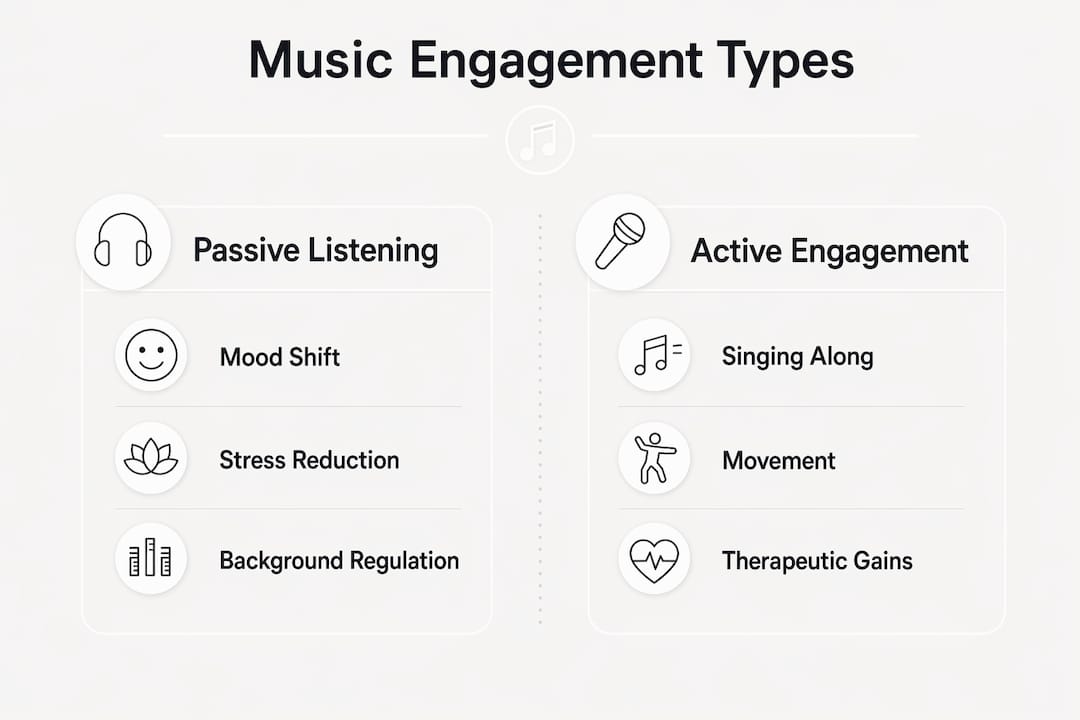
Research shows that active engagement through singing and movement amplifies therapeutic outcomes compared to passive listening. Live music pushes the effect further by adding a social and embodied dimension that recorded audio cannot replicate.
Pro Tip: If you want music to do more emotional work for you, move with it. Tap, hum, or sing along. The physical synchronization deepens the brain’s response.
What evidence supports music therapy for wellbeing?
Music therapy is a credentialed clinical intervention, not a playlist recommendation. The American Psychological Association draws a clear line between music therapy and music medicine. Music therapy involves a trained professional conducting personalized clinical assessments and iterative sessions. Music medicine is curated listening without a therapeutic relationship. Both have value, but they are not interchangeable.
The clinical evidence for music therapy is strong. Meta-analyses document moderate to large effect sizes for music interventions reducing stress, anxiety, and depressive mood. Specific protocols show real outcomes:
- 12-week music therapy programs for chronic pain and depression improve self-efficacy and social participation in measurable ways.
- Group singing elevates oxytocin and increases perceived social connection, according to psychosocial benefits research.
- Caregiver stress drops significantly when music is incorporated into patient care routines, improving the quality of the relationship itself.
- Person-centered approaches consistently outperform standardized protocols because therapist attunement to individual needs drives outcomes.
The gap between what music therapy can do and how widely it is used comes down to systemic barriers. Workforce shortages and reimbursement challenges prevent music therapy from being integrated into mainstream healthcare at scale. That means most people who could benefit from clinical music therapy never access it. The practical implication is that self-directed music use becomes more important, not less.
How do different types of music affect emotional regulation?
Not all music listening produces the same emotional result. The qualities of the music and the intention behind the listening both shape the outcome. High valence, high tempo music, what researchers call empowered listening, effectively uplifts positive emotions after stress. The mechanism is straightforward: fast, bright music activates arousal systems and interrupts rumination.
The opposite pattern carries real risk. Isomoodic listening means choosing music that matches your current emotional state. When you are sad and you play sad music, you may feel validated in the short term. But isomoodic listening can reinforce negative emotions rather than shift them. That distinction separates passive music consumption from intentional emotional regulation.
The most effective approach uses music in two stages:
- Match your current mood first. Choose music that reflects where you are emotionally. This validates the feeling without suppressing it.
- Gradually shift the tempo and tone. Move toward music with higher energy or more positive valence over several songs. The brain follows the arc.
- Anchor the target state. End with music that represents the emotional place you want to reach and stay there for at least a few minutes.
This iterative approach treats you as what researchers call a “music architect.” You are not just consuming sound. You are curating playlists as a scaffold for emotional recovery.
Pro Tip: Build two separate playlists: one that matches low or anxious moods, and one that represents your target emotional state. Use the first to start, then transition to the second. The shift itself is the therapy.
Browsing all genres on Arteest gives you the range to build both playlists with real depth, from ambient and jazz to high-energy electronic.
How can you use music intentionally to support mental health?
Intentional music use is a practice, not a one-time decision. The benefits of music for mental health compound when you build consistent habits around it. The following approaches are grounded in clinical and behavioral research.
Build playlists around emotional goals, not just taste. Identify what you need from music before you press play. Stress relief, focus, grief processing, and social energy each call for different sonic qualities. Artists like Chris Botti serve a very different emotional function than Armin van Buuren. Knowing which one you need is the skill.
Incorporate music into daily routines at transition points. Morning, commute, workout, and wind-down are natural anchors. Each transition is an opportunity to use music to set or shift your emotional state rather than letting the environment do it for you.
Use music for social bonding deliberately. Shared listening, singing together, and attending live performances all produce oxytocin and strengthen social connection. Group singing in particular produces elevated oxytocin and social cohesion that solo listening cannot replicate. Live music takes this further by adding physiological synchronization between people in the same space.
Engage physically with music whenever possible. Tap, move, sing, or play an instrument. The body’s rhythmic synchronization with music amplifies the emotional and neurological response. Passive listening is the floor, not the ceiling.
Pro Tip: Treat your music library the way you treat a medicine cabinet. Organize it by function, not just genre. “High energy for stress relief,” “slow for processing grief,” and “upbeat for social energy” are more useful categories than “pop” or “rock.”
The common misconception is that music is purely entertainment. The research says otherwise. Music is a tool for emotional expression, social connection, and even spiritual wellbeing. Using it deliberately is not overthinking it. It is using it correctly.
Key takeaways
Music directly regulates emotion through brain reward circuits, and intentional listening strategies produce measurably better mental health outcomes than passive consumption.
| Point | Details |
|---|---|
| Music activates reward circuits | Ancient brain systems respond to music the same way they respond to survival rewards. |
| Active engagement beats passive listening | Singing, movement, and live attendance amplify emotional and therapeutic outcomes. |
| Music therapy differs from music medicine | Clinical music therapy requires credentialed professionals; curated listening is a separate, lighter intervention. |
| Isomoodic listening carries risk | Matching sad music to a sad mood can deepen negative emotion rather than resolve it. |
| Intentional playlist curation works | Building playlists around emotional goals, not just taste, turns music into a practical mental health tool. |
Music’s power is real, but it demands intention
I have spent years watching people treat music as wallpaper. It plays in the background, fills silence, and gets ignored the moment something more demanding comes along. That is the biggest waste of one of the most powerful emotional tools available to any human being.
What the neuroscience makes clear is that music does not wait for your attention. It works on your brain whether you are focused on it or not. But the depth of that effect scales dramatically with how intentionally you engage. Passive listening moves the needle. Active, purposeful listening can shift your entire emotional baseline over time.
The clinical barriers are real. Workforce shortages in music therapy mean most people will never sit with a credentialed therapist in a formal session. That is a systemic failure worth addressing. But it also means the responsibility shifts to individuals to use music more deliberately in their own lives.
The cultural and social dimensions matter too. A song does not just affect you. It connects you to the people who love the same artist, to a moment in history, to a community. Live music amplifies this effect in ways that streaming alone cannot touch. The physiological synchronization that happens in a room full of people responding to the same sound is genuinely different from headphones on a commute.
My honest take: stop treating your music library as a passive collection and start treating it as a working toolkit. Know what each artist or playlist does for your emotional state. Build with intention. The research supports it, and your nervous system will thank you.
— Jorel
Arteest and the music you actually need
Music’s influence on happiness and emotional resilience depends entirely on having access to the right sounds at the right moment. Arteest is built for exactly that.
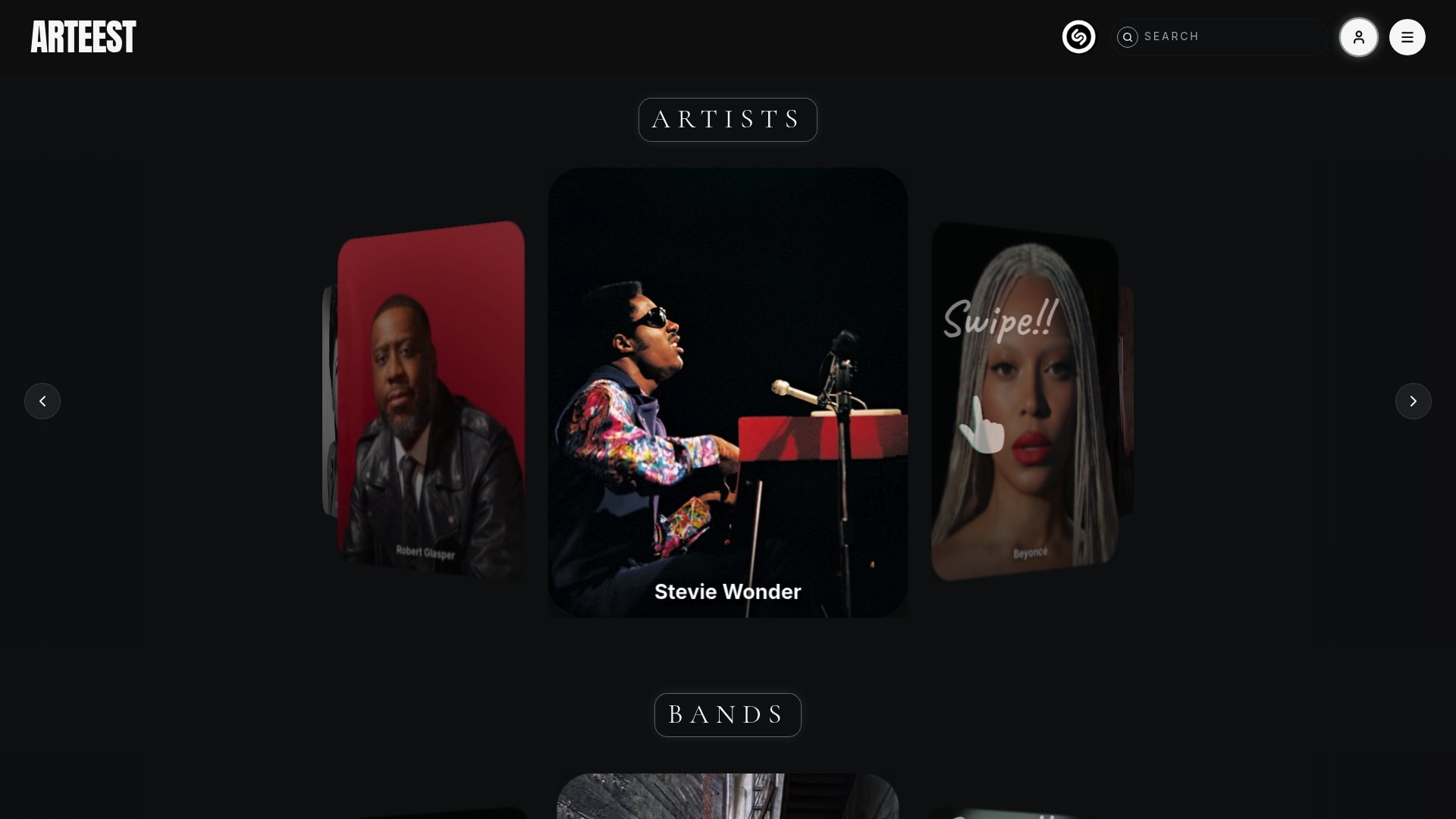
Arteest is a premium music discovery platform with thousands of artists, bands, record labels, producers, and engineers, each with their own page showing their complete career chronologically. You can build personal collections, organize bins of favorite artists, and create shareable playlists as PNG or video files to send directly to friends or post to social media. When the research says intentional music selection for emotional wellbeing matters, Arteest gives you the depth and organization to actually do it. Browse all artists on Arteest and start building the playlists your mental health deserves.
FAQ
What is the role of music in emotional wellbeing?
Music directly regulates emotion by activating brain reward circuits, memory systems, and identity networks. Research confirms that nearly all people report positive emotional responses to music, and most already use it for health-related goals.
How does music therapy differ from just listening to music?
Music therapy is a credentialed clinical intervention involving personalized assessment and a therapeutic relationship. Curated listening without a professional is called music medicine and produces benefits, but it is a lighter and less targeted intervention.
Can the wrong music make you feel worse?
Yes. Isomoodic listening, choosing music that matches a sad or anxious mood, can reinforce negative emotions rather than shift them. The recommended approach is to validate your current mood with matching music, then gradually transition to higher-energy or more positive tracks.
Does live music have a stronger emotional effect than streaming?
Live music produces stronger physiological and emotional responses than recorded audio. The social synchronization between people in the same space elevates connectedness and emotional impact beyond what headphones deliver.
How can I use music to build emotional resilience?
Build playlists around specific emotional goals rather than general taste, engage physically with music through movement or singing, and use music at daily transition points to set or shift your emotional state with intention.