

Ways to Curate Personal Music Taste in 2026
July 2, 2026
Ways to Curate Personal Music Taste in 2026
Curating your personal music taste is the practice of actively shaping what you listen to, rather than letting algorithms decide for you. The most effective ways to curate personal music taste combine mood-based organization, structured discovery inputs, and regular feedback cycles. Platforms like Arteest, Spotify, and Apple Music each offer tools to support this process, but the method matters more than the platform. Listeners who build intentional systems hear more music they love and discover more artists worth following.
1. Why mood-based organization beats genre sorting
Organizing by mood and activity is more effective than organizing by genre. Genre tells you what a song sounds like. Mood tells you whether it fits the moment.
Start every playlist with a single question: what do I want to feel? A playlist built around “focused and calm” can pull from ambient electronic, acoustic jazz, and lo-fi hip-hop without feeling scattered. The connecting thread is the emotional target, not the genre label.
- Define the emotion you want the playlist to produce
- Define the setting (commute, gym, dinner, deep work)
- Define the energy level (high drive, low and slow, building tension)
Pro Tip: Write a one-sentence emotional brief before you add a single track. Example: “Late-night drive, slightly melancholic, mid-tempo.” Every song you add should pass that brief.
2. How cross-genre playlists stay coherent

Cross-genre playlists succeed when they share a connecting thread like tempo, mood, or lyrical theme. Without that thread, the mix feels random and breaks listening flow.
Tempo is the easiest thread to use. A playlist locked at 90–100 BPM can include country, indie rock, and R&B without jarring transitions. Lyrical theme works well for slower, more intentional listening. Songs about loss, freedom, or ambition create narrative coherence even when the production styles differ widely.
Sequencing matters as much as selection. Think of your playlist as a set with a beginning, a middle, and an end. Bright tracks open, shadowy tracks close, and the middle builds or releases tension depending on the mood you defined upfront.
3. Four discovery inputs to avoid recommendation traps
A practical 2026 discovery system limits inputs to four types to prevent echo chambers and clutter. Using all four simultaneously gives you breadth without overload.
- Algorithmic input. Spotify’s Discover Weekly, Apple Music’s New Music Mix, or similar auto-generated feeds. These are fast and personalized but narrow over time if left unchecked.
- Editorial or human-curated input. Pitchfork, NME, or curated playlists from music blogs. Human taste introduces friction that algorithms avoid, which is exactly what expands your range.
- Artist-led input. Follow artists you respect and pay attention to what they share, recommend, or sample. Artists like Armin van Buuren publish tracklists and mixes that function as curated discovery feeds.
- Community input. Reddit threads, Discord servers, and platforms like Arteest where listeners share collections and bins of favorites. Community picks surface music that algorithms and editors both miss.
Pro Tip: Audit your discovery sources once a month. If a source has not surfaced a track you kept in the last four weeks, cut it. Low-yield inputs waste listening time.
4. Building a weekly review ritual
A weekly review ritual keeps your library purposeful and prevents saved tracks from becoming a graveyard. Set aside 20–30 minutes each week to sort what you saved into three folders: “Try Now,” “Listen Deep,” and “Keepers.”
“Try Now” holds tracks you saved but have not fully heard yet. “Listen Deep” holds songs that need more listens before you decide. “Keepers” is your permanent collection. This system forces a decision on every track instead of letting them pile up unreviewed.
The weekly ritual also sharpens your taste over time. Deciding what stays and what goes trains your ear to recognize what you actually value versus what just sounded interesting in the moment.
5. How active feedback loops refine your recommendations
An adaptive discovery workflow follows a repeating cycle: seed a playlist with tracks you love, build from recommendations, listen actively, give feedback, and repeat. Each cycle improves the next round of suggestions.
Active feedback means more than pressing the heart button. It means:
- Skipping quickly on tracks that miss the mark, which signals dislike to the algorithm
- Replaying tracks you love, which signals strong preference
- Rating or starring tracks in apps that support explicit ratings
- Removing tracks from playlists you no longer want, which recalibrates your taste profile
Passive listening, where you let a playlist run without interacting, teaches the algorithm nothing useful. Treat every session as a calibration exercise. The more deliberate your signals, the faster your recommendations improve.
6. How memory and emotion shape your music taste
Music evokes autobiographical memories that intensify emotional responses in listeners. This is not a casual observation. The BRECVEMA model, a framework from music psychology, identifies episodic memory as one of the primary mechanisms through which music produces emotion.
A song tied to a specific memory carries emotional weight that a technically superior song may not. That weight shapes your taste whether you recognize it or not. Listeners who understand this can use it deliberately.
“Playlists function as editable emotional repositories reflecting identity and taste shaping in streaming ecosystems.” — Music and identity research
Build playlists around emotional arcs, not just sonic ones. A playlist that moves from nostalgia to hope to energy mirrors how memory and emotion actually work in the brain. That structure makes the listening experience feel intentional and personal rather than random.
Music’s emotional effects also vary by context, individual traits, and environment. What moves one listener deeply may leave another unmoved. This is why personal curation matters more than any universal “best playlist” recommendation.
7. Using sequencing sliders to maintain playlist coherence
Sequencing is the craft skill most listeners skip. Two playlists with identical tracks can feel completely different based on order alone. Think of each transition as a dial with two poles: bright versus shadowy, intimate versus expansive, sparse versus dense.
Move the dial gradually. A jump from a sparse acoustic ballad to a dense orchestral track with no transition track in between breaks the listener’s immersion. One or two bridge tracks that share qualities of both extremes smooth the shift.
This technique works especially well for longer playlists meant for extended sessions like long drives, dinner parties, or deep work blocks. Short playlists of 10–15 tracks can afford more contrast. Long playlists need more careful sequencing to hold attention across the full run.
8. Maintaining your music collection: review, edit, and share
Taste personalization works best when aligned with current emotional and behavioral needs rather than fixed genres. That means your collection needs regular editing, not just regular additions.
| Maintenance task | Frequency | Purpose |
|---|---|---|
| Delete tracks that no longer fit | Monthly | Keeps playlists coherent and current |
| Promote favorites to a core collection | Weekly | Builds a reliable go-to library |
| Review and cut discovery sources | Monthly | Removes low-yield inputs |
| Share a curated playlist publicly | Quarterly | Reinforces taste identity and invites feedback |
Sharing playlists is underrated as a curation tool. When you share a playlist, you commit to it. That commitment forces you to edit more carefully than you would for a private list. Platforms that let you share collections as visual lists or exportable files make this process faster and more social.
Collaborative playlists add another layer. When a trusted friend adds tracks to a shared list, you get a human discovery input built directly into your collection. That is one of the most effective ways to expand taste without losing personal coherence.
Key takeaways
The most effective way to refine music preferences combines mood-based organization, four-input discovery, active feedback, and regular collection maintenance.
| Point | Details |
|---|---|
| Organize by mood, not genre | Start every playlist with an emotional brief: emotion, setting, and energy level. |
| Use four discovery inputs | Combine algorithmic, editorial, artist-led, and community sources to avoid echo chambers. |
| Give active feedback | Skip, replay, and rate tracks deliberately to improve recommendation quality over time. |
| Leverage memory and emotion | Build playlists around emotional arcs to create personally meaningful listening experiences. |
| Review and edit regularly | Use weekly and monthly rituals to remove clutter and keep your collection purposeful. |
What I’ve learned from years of curating my own listening
The biggest mistake I made early on was treating my library like a collection rather than a living system. I saved everything that caught my ear and reviewed nothing. Within a year, I had thousands of tracks I never played and no clear sense of what I actually loved.
The shift came when I started treating each listening session as a deliberate act. I wrote emotional briefs. I audited my discovery sources. I deleted tracks I had not played in six months without guilt. My library got smaller and my satisfaction with it got much higher.
The memory connection surprised me most. Once I understood that certain songs carry emotional weight because of what they are tied to, I stopped trying to be objective about my taste. Taste is not objective. It is personal, contextual, and always changing. The best curation systems account for that rather than fighting it.
My current setup uses Arteest for artist-led discovery, one editorial source, one algorithmic feed, and a small community of listeners I trust. I review my saved tracks every Sunday. That routine took about three months to feel natural. Now it is the part of my week I look forward to most.
Curiosity is the only non-negotiable. If you approach new music with genuine interest rather than judgment, your taste will keep growing in directions you did not expect.
— Jorel
How Arteest supports your music discovery
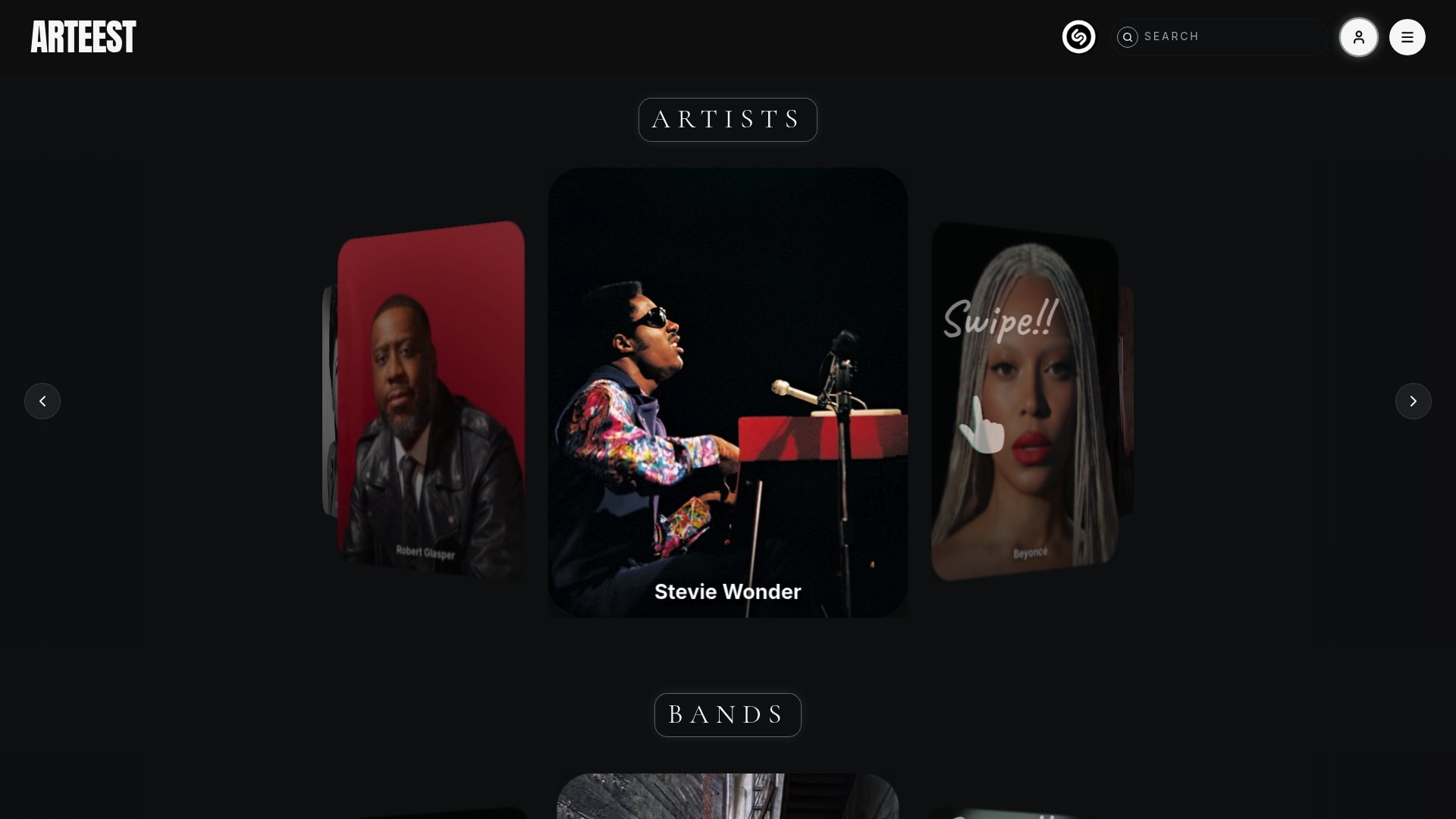
Arteest is built for listeners who take their music taste seriously. The platform gives you access to thousands of artists, bands, record labels, producers, and engineers, each with a dedicated page showing their full career in chronological order. That structure makes artist-led discovery genuinely useful rather than surface-level.
Your personal profile on Arteest holds collections and bins of your favorite artists. Lists are stackable, filterable, and exportable as PNG or .mov files you can share directly to social media or send to friends. If you want to build a unique music library and share it with people who care about music as much as you do, Arteest is where that happens. You can also browse by genre or era to push your taste into new territory.
FAQ
What is the best way to start curating a personal music taste?
Start by organizing existing favorites by mood and activity rather than genre. Write a one-sentence emotional brief for each playlist before adding tracks.
How do I refine my music preferences without getting overwhelmed?
Limit your discovery inputs to four types: algorithmic, editorial, artist-led, and community. Review and cut low-yield sources monthly to keep your system manageable.
Why do certain songs feel more personal than others?
Music evokes autobiographical memories that intensify emotional responses. The BRECVEMA model identifies episodic memory as a primary mechanism linking songs to strong personal emotions.
How often should I review and edit my music collection?
A weekly review of saved tracks and a monthly audit of discovery sources keeps your library coherent. Delete tracks that no longer fit and promote favorites to a core collection.
What makes a cross-genre playlist work?
Cross-genre playlists succeed when every track shares a connecting thread like tempo, mood, or lyrical theme. Without that thread, the mix feels random and breaks listening flow.