

What Are Music Discovery Tools? A Guide for Listeners
July 2, 2026
What Are Music Discovery Tools? A Guide for Listeners
Music discovery tools are digital platforms and methods designed to connect listeners with new music through algorithms, human curation, community interaction, and visual interfaces. They range from automated recommendation engines to editorial playlists, fan communities, and visual browsing systems like Arteest. The category matters because passive listening alone rarely surfaces the full range of music worth hearing. Narrative-based recommendations rate as more meaningful to listeners than demographic matching, which shows that how you discover music shapes what you actually remember and return to.
What are music discovery tools and how do they work?
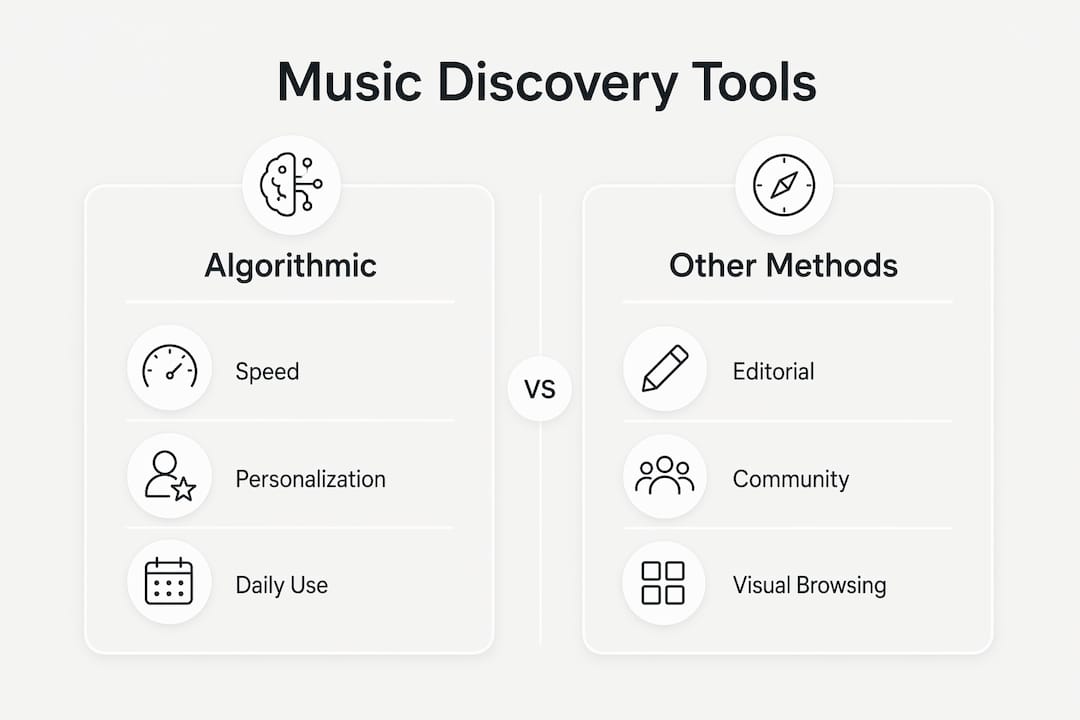
Music discovery tools fall into four core categories: algorithmic engines, editorial platforms, community hubs, and visual browsing interfaces. Each works differently and serves a different listening need.

Algorithmic engines analyze your listening history, skip patterns, and session length to predict what you will want next. They are fast and frictionless, but they tend to reinforce what you already know. Indie artists are surfaced primarily by community and editorial platforms, not algorithms, because algorithms require strong engagement signals before promoting unfamiliar names.
Editorial platforms rely on human curators who write, select, and sequence music with intention. A well-built editorial playlist tells a story. The sequencing creates contrast and momentum that an algorithm cannot replicate because it has no emotional logic.
Community hubs are fan-driven spaces where listeners share finds, debate releases, and build taste together. These platforms excel at surfacing music with rich context and early exposure before mainstream breakthroughs. The insider knowledge that circulates in fan communities is genuinely ahead of what any algorithm tracks.
Visual browsing tools replicate the physical experience of flipping through records in a crate. Tools like Radio Garden and Music Map use visual and geographical paths to surface indie and global music that flat algorithmic lists suppress entirely. Arteest takes this further by organizing thousands of artists, bands, record labels, producers, and engineers into chronological career pages that you can browse visually and filter by genre.
Pro Tip: Use an algorithmic tool for your daily listening and a visual or community platform at least once a week. The combination prevents the filter bubble that forms when you rely on a single method.
| Category | Strength | Best for |
|---|---|---|
| Algorithmic engines | Speed and personalization | Daily listening, familiar genres |
| Editorial playlists | Narrative and sequencing | Mood-based discovery, new genres |
| Community hubs | Context and early access | Indie finds, taste expansion |
| Visual browsing | Serendipity and depth | Deep dives, obscure labels |
Why do guided and visual music discovery tools matter?
Guided and visual discovery methods produce stronger retention than passive algorithmic feeds. The reason is cognitive context. Song introductions that provide narrative context broaden musical taste more effectively than matching based on past genre history alone. When you know why a track was selected for you, it sticks.
Visual elements amplify this effect. Animated cover art and visualizers significantly increase engagement and reduce listener drop-off. The implication is direct: a platform that pairs music with strong visuals keeps listeners longer and converts casual plays into genuine favorites.
“Visual storytelling is no longer optional but foundational in modern music discovery, connecting sound with mood and emotional narrative to engage listeners.” — Illustrate Magazine
Discovery behavior also splits by expertise level. High-domain-expertise listeners prefer narrow, fast tools while casual listeners rely on exploratory, visual interfaces. This split matters for how you choose your tools. If you are a casual listener, a visually rich interface will serve you better than a raw algorithmic feed with no context.
Visual browsing is fundamentally about digital crate-digging, using visual hierarchy to rediscover obscure labels, genres, and artists. Algorithms suppress this kind of serendipity by design because they optimize for engagement signals, not surprise. A visual interface creates the unexpected connection that makes music discovery feel like an adventure rather than a chore.
- Narrative context increases the chance a new artist becomes a long-term favorite
- Visual hierarchy surfaces connections that flat lists hide
- Guided discovery reduces the cognitive load of choosing from an unlimited catalog
- Community context adds emotional weight that algorithms cannot generate
Pro Tip: When you find a new artist you love, look up their full career chronology before moving on. Understanding where a record fits in an artist’s arc changes how you hear it.
How to combine discovery methods for better results
No single discovery method covers every need. The most effective approach combines algorithmic speed with community depth and visual serendipity.
-
Start with an algorithm for daily listening. Let it surface familiar-adjacent music while you work or commute. This keeps your queue full without requiring active effort.
-
Set aside time for visual browsing weekly. Platforms like Arteest let you browse all genres and all artists chronologically, which replicates the physical record store experience. Browsing this way surfaces artists you would never have searched for directly.
-
Use playlists as a memory system. When you find something worth keeping, add it to a named playlist immediately. Memory research consistently shows that music heard without a retrieval cue fades faster than music anchored to a context or collection.
-
Research setlists before and after live events. Setlist data connects music to a specific cultural moment. Knowing that a track was played at a particular show gives it a story, and stories make music stick.
-
Join at least one fan community for a genre you want to explore. Community platforms surface insider knowledge and early releases that algorithms will not index for months. The conversation around music is part of the discovery.
-
Build shareable collections. Arteest supports custom shareable lists exportable as PNG or MOV files for direct sharing to social media or text. Sharing your finds creates accountability and invites reciprocal recommendations from people whose taste you trust.
The goal is a system where each method feeds the others. An algorithm surfaces a name, a visual browse reveals the full career, a community thread explains the cultural context, and a playlist locks in the memory.
What are the emerging trends in music discovery technology?
The field is moving away from passive recommendation toward interactive, narrative-driven, and spatially organized discovery. Three trends define where things are heading in 2026.
Narrative-based recommendation systems
The Blooming Beats research project demonstrates how embedding narrative context into recommendation interfaces promotes transparency and reflective music exploration. Instead of receiving a list of tracks, listeners anchor recommendations to personal milestones and stories. The result is a discovery experience that feels personal rather than automated.
Digital crate-digging interfaces
Visual discovery goes beyond cover art galleries. It employs spatial organization to reveal hidden relationships between genres, labels, and artists. Experienced listeners value interfaces that replicate physical browsing because the act of looking creates discoveries that searching never would. Arteest’s chronological artist pages are built on this principle.
Rapid visual content creation for artists
AI-assisted tools enable rapid creation of music visuals, increasing artists’ storytelling capacity at faster production cycles. This matters for listeners because it means more artists can now pair their music with compelling visual context, making discovery richer across the board.
| Trend | What it changes | Who benefits most |
|---|---|---|
| Narrative recommendations | Discovery feels personal, not automated | Casual listeners |
| Visual crate-digging interfaces | Surfaces obscure artists and labels | Deep-dive enthusiasts |
| Rapid visual content creation | More artists have visual storytelling | All listeners |
| Shareable collection tools | Discovery becomes social and reciprocal | Community-driven listeners |
Key Takeaways
The most effective music discovery combines algorithmic personalization, human-curated editorial context, community knowledge, and visual browsing to surface music that algorithms alone will never find.
| Point | Details |
|---|---|
| Four core categories exist | Algorithmic, editorial, community, and visual tools each serve a distinct discovery need. |
| Narrative context drives retention | Recommendations with story and context stick longer than demographic-matched suggestions. |
| Visual browsing creates serendipity | Spatial and chronological interfaces surface obscure artists that flat lists suppress. |
| Combining methods beats any single tool | Pairing algorithms with visual and community platforms prevents filter bubbles. |
| Shareable collections reinforce memory | Exporting and sharing your finds anchors music to social context and aids recall. |
Why I think most listeners are using discovery tools wrong
Most listeners treat music discovery as a passive activity. They open an app, let the algorithm run, and call it done. That approach works for filling silence, but it rarely produces the kind of discovery that changes your relationship with music.
The research on narrative context makes this clear. When a recommendation comes with a story, a reason, or a visual anchor, it lands differently. The track becomes an event rather than background noise. Platforms that understand this build interfaces around context, not just content.
The mistake I see most often is over-reliance on a single tool. Algorithmic feeds are fast and convenient, but they are designed to keep you comfortable, not to challenge you. The most meaningful discoveries I have made came from visual browsing sessions where I had no specific goal, or from a community thread where someone explained why a particular record mattered. That kind of context is irreplaceable.
The other pitfall is skipping the collection step. Finding a great artist and not anchoring that find to a playlist, a note, or a shared list means you will likely lose it within a week. Discovery without memory is just noise.
My honest advice: treat discovery as a practice, not a feature. Spend time with visual interfaces. Read about the artists you find. Share your collections. The listeners who do this consistently build taste that no algorithm can replicate.
— Jorel
Arteest brings every discovery method together
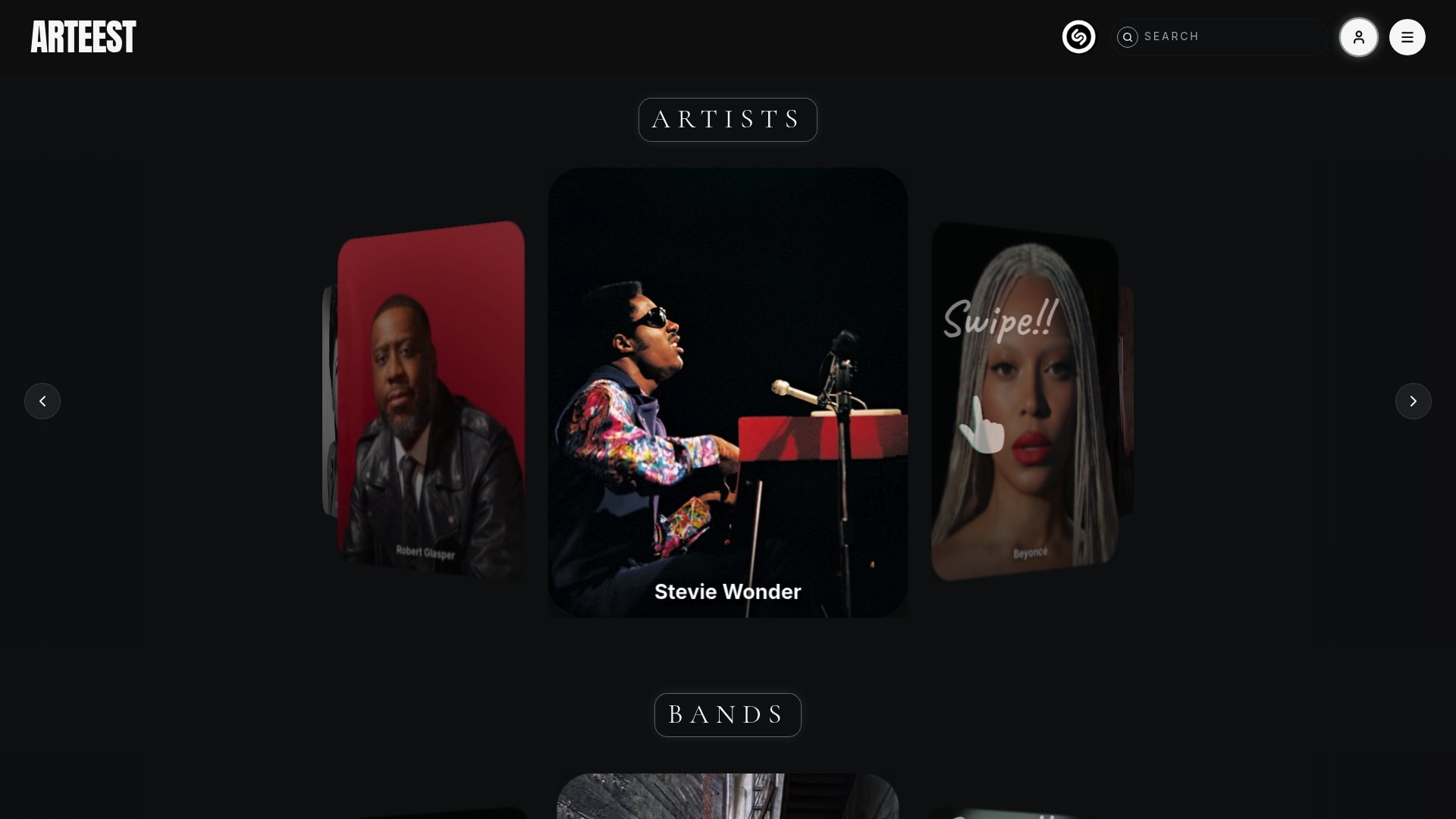
Arteest is a premium music discovery platform built for listeners who want more than a playlist. Every artist, band, record label, producer, and engineer on the platform has a dedicated page showing their full career chronologically. You can browse all artists and all genres visually, build personal collections and bins, and export your custom lists as PNG or MOV files to share directly to social media or send to friends. The platform combines the visual depth of crate-digging with the organizational power of a personal music library. If you are serious about finding music that matters, Arteest is where that practice lives.
FAQ
What are music discovery tools, exactly?
Music discovery tools are platforms and methods that help listeners find new music through algorithms, editorial curation, community interaction, and visual browsing. They range from automated recommendation feeds to chronological artist databases like Arteest.
What is the most effective way to discover new music?
Combining algorithmic tools for daily listening with visual browsing and community platforms produces the deepest results. Narrative context and visual anchors make new discoveries more memorable than algorithm-only approaches.
Why does visual music browsing matter?
Visual browsing replicates the physical crate-digging experience digitally, surfacing obscure artists, labels, and genres that flat algorithmic lists suppress. Experienced listeners consistently rate visual interfaces as more effective for deep discovery.
How do community-driven platforms differ from algorithms?
Community platforms surface music with rich cultural context and early access before mainstream algorithms index it. Fan hubs excel at taste expansion and insider knowledge that passive recommendation engines cannot generate.
What makes a music discovery tool worth using long-term?
A tool earns long-term use when it combines speed with context, supports collection-building, and surfaces artists outside your existing taste. Platforms that offer chronological career views, shareable lists, and genre browsing give listeners the structure to turn discovery into a lasting practice.