

Why Music Collections Go Unheard: A Collector's Guide
July 2, 2026
Why Music Collections Go Unheard: A Collector’s Guide
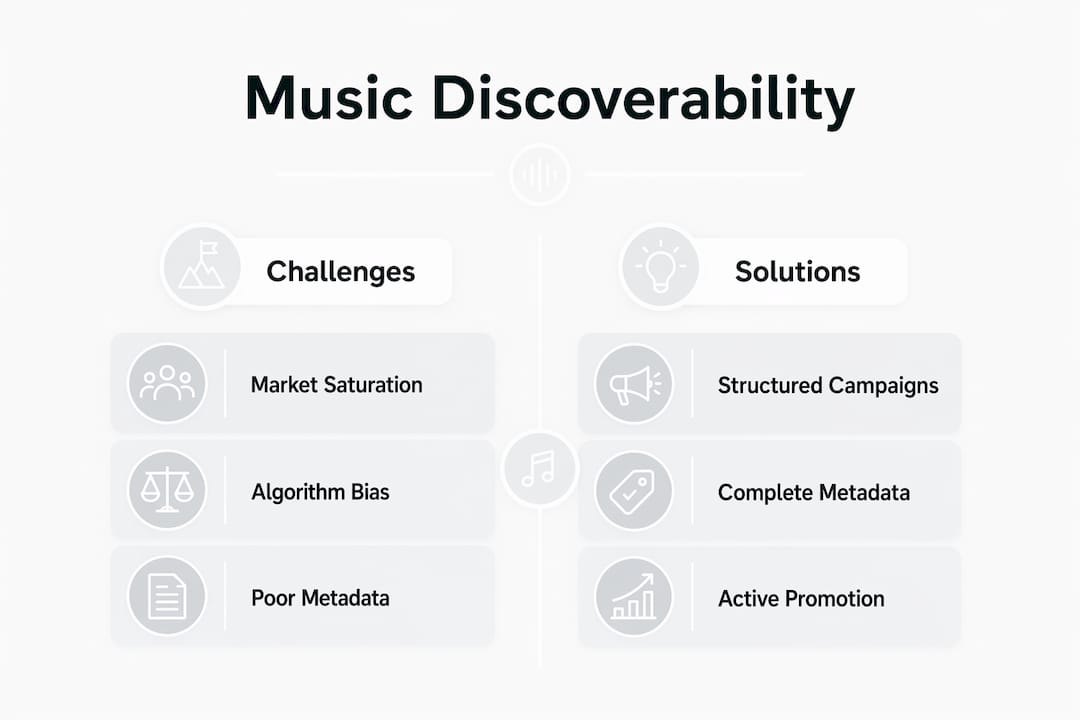
Music collections go unheard primarily because of market saturation and the absence of structured discovery infrastructure, not because the music lacks quality. The streaming era has created a supply problem so severe that even well-curated collections vanish into the noise before a single listener finds them. Luminate’s 2025 data shows the scale of this challenge is growing year over year. Understanding why music goes undiscovered is the first step toward doing something about it. This guide breaks down the real reasons collections stay invisible and gives collectors concrete ways to change that.
Why music collections go unheard in the streaming era
The core problem is volume. 106,000 new tracks were delivered to streaming services daily in 2025, a 7% increase from 2024. That number means listeners face an impossible choice every single day, and most tracks never get chosen.
The consequences are stark. 88% of tracks received 1,000 or fewer streams in 2025, and nearly half received fewer than 10. That is not a long tail. That is an invisible tier of music that exists on paper but reaches no one.

Collector-curated libraries face the same wall. A collection built over decades, digitized and uploaded with care, competes directly with this flood of new content. Streaming platforms do not distinguish between a lovingly assembled archive and a batch of algorithmically generated filler. Both enter the same queue. Both fight for the same attention.
The saturation problem also reshapes listener behavior. When supply is infinite, listeners default to familiar names and platform recommendations. Overlooked music albums and forgotten music tracks rarely surface through casual browsing. Collectors who rely on passive discovery are betting against the odds.
How do algorithms decide what music gets heard?
Algorithms do not evaluate music quality. They evaluate engagement signals. A track with no plays, no saves, and no playlist adds is invisible to the system, regardless of how good it sounds. This is the cold-start problem, and it hits undiscovered music collections hardest.
Research on cold-start music recommendation shows that new tracks with limited interaction history need artist context and metadata to improve recall and ranking. Artist-aware methods more than double recall and ranking quality compared to content-only baselines. That finding matters because it means a track attached to a well-documented artist profile performs better than an identical track floating without context.
The bias runs deeper than just new releases. Recommender systems reinforce established tastes, structurally limiting exposure to unfamiliar music. A collector whose library sits outside mainstream genres faces a system that is not designed to surface it. The algorithm is not neutral. It favors what already works.
TU Delft research found that feedback-driven gradual discovery improves engagement with new genres. Users showed higher affinity for unfamiliar music when discovery happened incrementally through iterative feedback. That approach mirrors how great music collections actually work: one track leads to another, context builds, and the listener’s taste expands.
Pro Tip: When uploading tracks to any platform, fill every metadata field available. Genre, mood, artist bio, and related artists all feed the algorithm’s ability to place your music in front of the right listener.
Does campaign infrastructure determine whether music gets heard?
The music industry has a phrase for what happens to most releases: upload and abandon. An artist or collector puts music online, shares it once, and waits. Nothing happens. The music joins the 88% problem, where release failures stem from a lack of structured strategy rather than poor audio quality.
Discovery is the endpoint of a chain. That chain starts with pitching and positioning, moves through playlist placement and press coverage, and only then reaches the listener. Collectors who skip the early steps and jump straight to uploading are entering the chain at the wrong end.
A strong campaign infrastructure includes these components:
- Pre-release positioning. Define who the collection is for before it goes live. A jazz archive aimed at bebop collectors needs different framing than a collection of 1990s indie rock.
- Playlist pitching. Submit tracks to editorial playlists on Spotify and Apple Music at least seven days before release. Independent playlist curators on platforms like SubmitHub accept submissions year-round.
- Press and blog outreach. Music blogs, Substack newsletters, and genre-specific publications still drive meaningful discovery for niche collections.
- Sustained social presence. A single post on release day does not build an audience. Weekly content tied to the collection’s identity compounds over time.
- Feedback loops. Track what resonates. Which tracks get saved? Which generate comments? Use that data to guide the next push.
The most expensive song in a catalog is often the one nobody uses because it is not properly positioned, documented, or marketed. Lost opportunities happen silently, and they hurt catalog value regardless of music quality. Collectors who treat their libraries as living projects rather than finished archives consistently outperform those who do not.
Pro Tip: Treat every release as a 90-day campaign, not a single event. The first week is the launch. Weeks two through twelve are where sustained attention actually builds.
How does metadata and catalog organization affect discoverability?
A collection’s surface area determines how many ways a listener can stumble into it. A well-organized catalog with multiple entry points, clear bins, consistent tagging, and repeatable hooks generates the engagement signals that trigger algorithmic promotion. A poorly tagged archive has one entry point: luck.
The table below shows the difference between a catalog that gets found and one that stays buried.
| Catalog element | Undiscovered collection | Discoverable collection |
|---|---|---|
| Track metadata | Incomplete or missing | Full genre, mood, BPM, and artist tags |
| Artist context | No bio or related artists | Detailed bio with career timeline |
| Collection identity | No defined theme or audience | Clear focus with named audience |
| Entry points | Single upload, no curation | Multiple playlists, bins, and themed lists |
| Engagement hooks | No hooks or recurring content | Regular updates, themed releases |
Digitized but unprocessed collections often remain unheard for years because of metadata, cleanup, and backlog bottlenecks. Volunteers transferring tapes face delays in tagging and audio cleanup before material becomes publicly available. The restoration is only the first step. Catalog readiness is what determines whether anyone ever hears the result.
Music without clear context is often ignored despite quality. Meaning, identity, and a defined audience are the signals that attract listener attention when supply is abundant. A collection about Chicago blues from 1955 to 1970 has a story. A collection labeled “various tracks” does not.
Consistent tagging also compounds over time. Every correctly tagged track adds to the artist’s or collector’s overall signal strength. Platforms like Arteest, which display an artist’s entire career chronologically, reward this kind of catalog discipline with better visibility across the full discography.
What strategies actually help collectors get their music heard?
Getting music heard requires treating discovery as a system, not a hope. The following approaches address the specific reasons collections stay invisible.
- Build a defined identity first. A collection without a clear audience is a collection without a destination. Name the genre, era, mood, and listener before uploading anything.
- Use artist context as a discovery lever. Artist-aware metadata significantly boosts recommendation performance for new tracks. Link every track to a complete artist profile with biography, related artists, and career context.
- Create multiple entry points. Themed playlists, curated bins, and shareable lists each represent a separate path into the collection. More paths mean more chances for discovery.
- Sustain promotion beyond release day. The upload and abandon pattern is the single most common reason music collection exposure issues persist. Weekly touchpoints keep a collection alive in the algorithm.
- Use platforms built for depth. General streaming platforms optimize for new releases and trending content. Platforms designed for catalog discovery, like Arteest, surface full career timelines and let collectors build shareable, filterable lists that travel across social media and text.
Pro Tip: Export your collection as a shareable image or short video and send it directly to friends or post it to social media. Personal recommendations still outperform algorithmic discovery for niche music.
Key takeaways
Music collections go unheard because saturation, algorithmic bias, missing campaign infrastructure, and poor catalog organization combine to make even great collections invisible without deliberate effort.
| Point | Details |
|---|---|
| Saturation is the baseline problem | 106,000 new tracks daily means every collection competes in an extremely crowded field. |
| Algorithms favor engagement, not quality | Tracks without interaction history need artist context and metadata to gain algorithmic traction. |
| Campaign infrastructure drives discovery | Upload and abandon is the leading cause of release failure, not poor audio quality. |
| Metadata creates surface area | Complete tagging, defined identity, and multiple entry points generate the signals platforms need. |
| Sustained effort compounds | Weekly promotion and feedback loops build audience attention over 90 days, not one release day. |
What I’ve learned from watching great collections stay silent
I have watched collectors spend years building extraordinary libraries and then upload everything in a single afternoon with no plan. The music is real. The curation is genuine. And then nothing happens. That silence is not a verdict on the music. It is a verdict on the infrastructure around it.
The collectors who break through share one habit: they treat their collection as a living project with an audience in mind. They do not release and disappear. They show up weekly, add context, build themed lists, and talk about what they love. The music becomes a conversation rather than an archive.
The gap between a heard collection and an unheard one is almost never about quality. It is about signal. A collection with a clear identity, complete metadata, and a sustained presence will always outperform a better collection that has none of those things. That is uncomfortable but useful. It means the infrastructure gap is an opportunity. Collectors who build the system around their music gain an advantage over those who simply upload and wait.
The other thing I have noticed is that collectors underestimate the power of specificity. A collection framed as “the complete recorded output of Art Farmer between 1953 and 1965” is infinitely more discoverable than one labeled “jazz.” Specificity creates context. Context creates care. And care is what turns a listener into a fan.
— Jorel
Arteest: a platform built for the collections that deserve to be heard
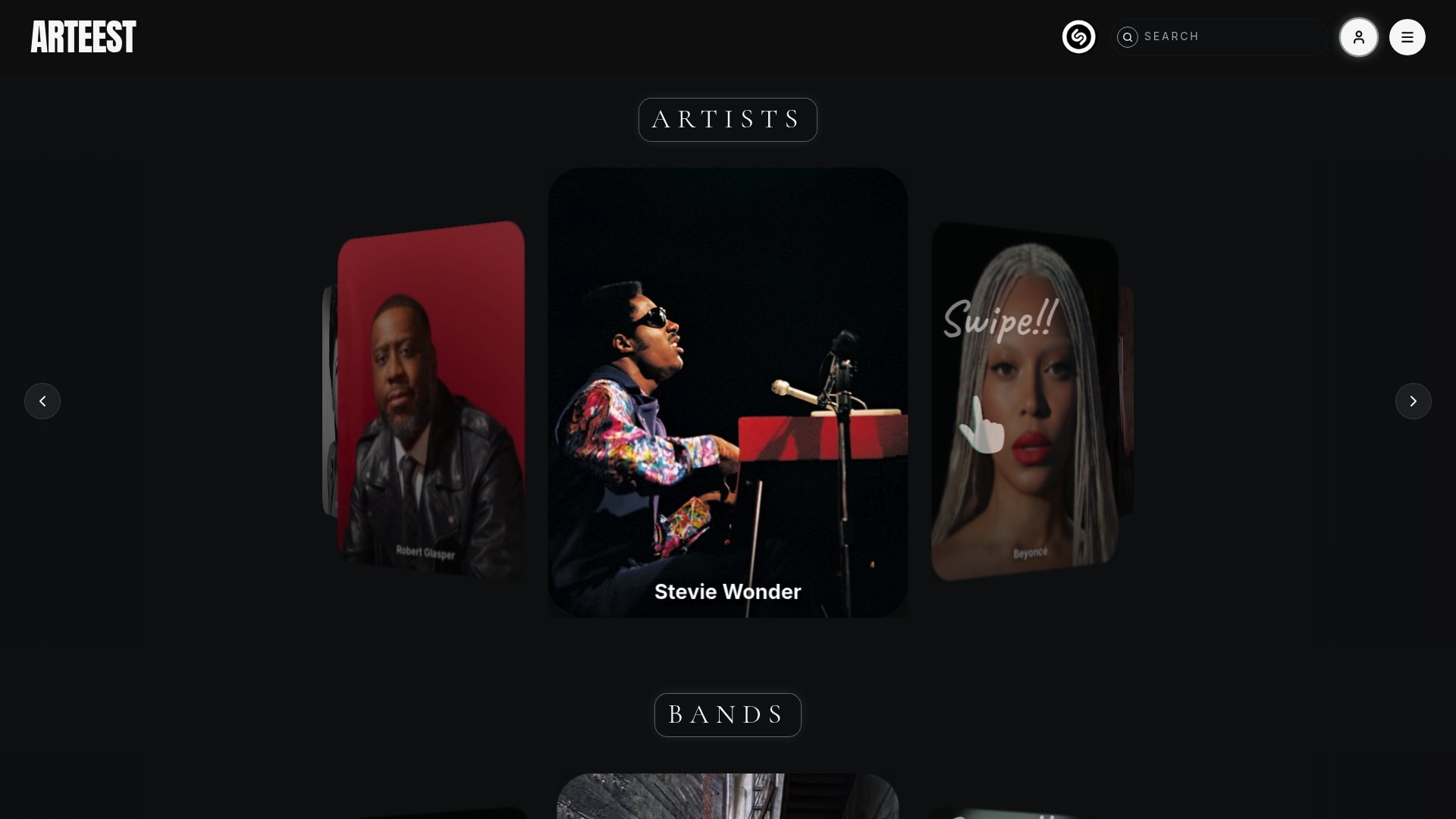
Arteest is a premium music discovery platform built specifically for the depth that general streaming services ignore. Every artist, band, record label, producer, and engineer on Arteest has a dedicated page showing their complete career chronologically. That structure gives collectors and enthusiasts the context that algorithms need and listeners want.
Personal profile pages on Arteest let you build collections and bins of favorite artists, create filterable lists, and export them as shareable PNG or video files to post directly to social media or send to friends. For collectors tired of watching great music stay buried, Arteest offers a system designed to surface it. Browse all artists or explore by genre to find collections worth hearing.
FAQ
Why do most music tracks get so few streams?
88% of tracks received 1,000 or fewer streams in 2025, with nearly half receiving fewer than 10. The primary cause is market saturation combined with no promotional infrastructure around the release.
What is the cold-start problem in music recommendation?
The cold-start problem occurs when a new track has no interaction history, making it invisible to recommendation algorithms. Artist-aware metadata more than doubles recall and ranking quality for tracks in this situation.
Does music quality determine whether a collection gets heard?
Music quality is rarely the deciding factor. Release failures are driven by the absence of structured strategy, pitching, and positioning rather than poor audio quality.
How does metadata help a music collection get discovered?
Complete metadata gives platforms the context needed to place tracks in front of relevant listeners. Genre tags, artist biography, mood labels, and related artist links all improve a track’s ranking and recall in recommendation systems.
What is the best way to promote a niche music collection?
Build a defined identity for the collection, create multiple entry points through themed playlists and curated lists, and sustain promotion over at least 90 days. Platforms like Arteest that support full career timelines and shareable collection exports give niche collections structural advantages that general streaming platforms do not.